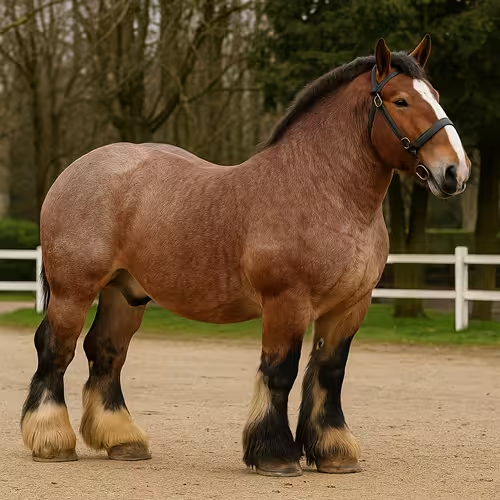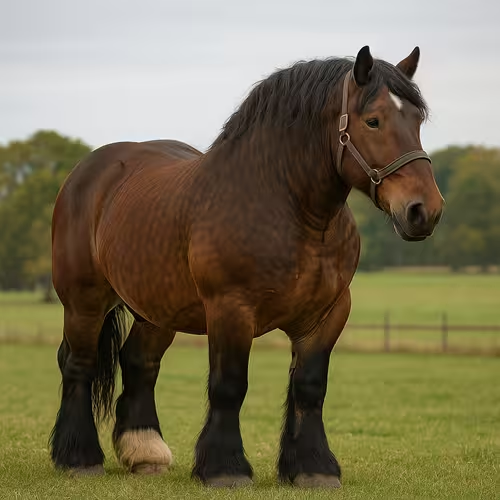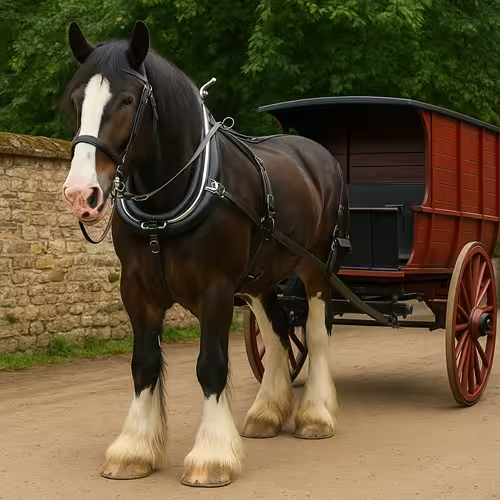
The Belgian horse, also known as the Brabant horse, is one of the strongest and most recognizable draft horse breeds in the world. Originating from Belgium, it has been a symbol of power, endurance, and reliability for centuries. It gained fame thanks to its extraordinary pulling strength, impressive build, and calm temperament.
From the Middle Ages to modern times, Belgian horses have been used for farm work, transport, and heavy draft tasks. They became the backbone of agricultural life in Europe, and in the 20th century they also gained immense popularity in the United States, where they are still considered record holders in strength competitions.
Today, the Belgian horse is not only a working giant but also a national pride of Belgium. It appears in parades, shows, and breeding programs, where it impresses with its monumental build, immense strength, and at the same time a gentle heart.
Table of Contents
Origin and History of the Belgian Horse
The Belgian horse, also known as the Brabançon or Brabant horse, is one of the oldest and most influential draft horse breeds in Europe. Its history dates back to the Middle Ages, and its homeland is the region of Brabant—an area of present-day Belgium known for its strong breeding and agricultural traditions.
Medieval beginnings
As early as the Middle Ages, Belgian horses played a key role as war horses. Their powerful build and endurance allowed them to carry heavily armored knights and take part in battles, where not only strength but also courage was required. Thanks to this, Brabant horses quickly gained recognition throughout Europe.
From the battlefield to agriculture
With the decline of feudalism and the end of the age of knighthood, the role of the Belgian horse began to change. It moved from the battlefield to the fields and roads of Europe, where it became an indispensable draft horse. It was used for plowing, transporting heavy loads, and working on farms, which strengthened its position as a foundation of everyday life in the Brabant region.
Worth reading:
- Poznaj więcej ras koni. Zapoznaj się dokładnie z ich charakterem, cechami.
- Poznaj konia Shire – prawdziwego giganta wśród koni, znanego z siły i łagodności.
- Odkryj konia Percheron – majestatycznego siłacza z Francji, idealnego do zaprzęgów i pokazów.
- Przeczytaj o koniu Clydesdale – szkockiej rasie, która zachwyca swoim imponującym wyglądem i piórami na nogach.
- Dowiedz się, dlaczego koń fiński jest narodowym skarbem Finlandii i wszechstronnym koniem do pracy i sportu.
- Pielęgnacja kopyt u koni belgijskich – podstawy i profilaktyka
19th Century – Breed Standardization
In the 19th century, Belgian breeders began systematic selection aimed at developing a horse with even greater pulling power, endurance, and a gentle temperament. It was also during this time that the first official studbooks were established, allowing for the standardization of breed characteristics and strengthening its reputation on the international stage.
20th Century – Global Expansion
With the emigration of Europeans to North America, Belgian horses were widely imported to the United States and Canada. There, they began to gain fame as some of the strongest horses in the world, setting records in strength competitions such as draft horse pulling. To this day, Belgian horses are among the most commonly bred draft horses in the United States.
Present Day
Today, the Belgian horse is not only a working giant but also a national symbol of Belgium. The breed appears in parades, festivals, and heritage preservation programs. Its genetic influence can also be seen in the breeding of other draft horses, including Polish Sztum and Sokółka horses, which were developed in part through crossbreeding with Belgian horses.

Appearance and Distinctive Features
The Belgian horse, also known as the Brabant horse, is a true giant among draft horses. Considered one of the strongest horses in the world, it impresses with both its mass and muscular build. Despite its enormous size, it maintains harmonious proportions and gives the impression of a dignified and majestic animal.
Build and Conformation
- Height at the withers – usually 165–175 cm, although taller individuals do occur.
- Body weight – often reaches 1000–1200 kg, with record individuals exceeding this range.
- Chest – extremely wide and deep, indicating large lung and heart capacity required for heavy work.
- Limbs – short and massive, with powerful joints and wide hooves. Around the fetlocks, there are characteristic dense featherings that require regular care.
- Hindquarters – very strong, broad, and well-muscled, serving as the main source of pulling power.
- Neck – short, thick, and muscular, well connected to the rest of the body.
- Head – large, with a pronounced profile, straight or slightly convex. Large, calm eyes emphasize the breed’s gentle nature.
Coat Colors
The most common coat colors in Belgian horses include:
- roan,
- chestnut,
- bay,
- gray.
White markings on the head and legs are also very common, further enhancing the striking appearance of this breed.
Overall Impression
The Belgian horse is an animal that commands respect and admiration. It combines power, mass, and strength with a majestic grace. Despite its impressive size, its movement is fluid and energetic, making these horses admired not only in work but also in shows and parades.
Character and Temperament
The Belgian horse is a breed that perfectly combines physical strength with a gentle disposition. Despite its monumental size, it is known for its exceptional patience and friendly nature. Thanks to this, it has earned a reputation as a predictable and safe horse for everyday work with humans.
Key Temperament Traits
- Calmness and composure – Belgian horses are resistant to stress and rarely react impulsively. They are not easily startled and handle noisy, busy environments well.
- Gentleness – in contact with humans, they show great patience and willingness. It is a breed that easily forms strong bonds with its handler.
- Intelligence – Belgian horses learn new tasks quickly, which makes them versatile and easy to train.
- Obedience – thanks to their trainability and natural patience, they work exceptionally well in harness and in team settings.
- Patience – they tolerate repetitive, heavy work very well. They can perform the same tasks for many hours without losing focus.
The Belgian Horse in Work and Recreation
Thanks to its calm temperament, the Belgian horse has been used for centuries in agricultural and forestry work, where endurance and obedience are essential. Today, its temperament also makes it well-suited for:
- recreational driving,
- shows and parades,
- educational work and agritourism,
- and even light recreational riding for heavier riders.
General Characteristics
The Belgian horse is a breed with exceptional mental balance and high intelligence. Whether working in the forest, pulling a carriage in a parade, or taking part in strength demonstrations, it is always characterized by calmness and loyalty to humans. This unique combination of power and gentleness makes the Belgian one of the finest representatives of draft horse breeds.
Uses of Belgian Horses
For many centuries, the Belgian horse was the backbone of the workforce in Europe. In times before agricultural machinery and modern transport existed, these Brabant giants pulled plows, wagons, and beer barrels. In sawmills, on construction sites, and in breweries, they were indispensable. Thanks to their extraordinary strength and patience, they earned a reputation as the most reliable draft horses.
Modern Uses
- Forestry work – Belgian horses are still used for logging, especially in areas where machinery cannot access and where horses are a more environmentally friendly option.
- Ceremonial transport – majestic Belgian teams appear at weddings, parades, and historical reenactments, where they impress with their appearance and dignity.
- Recreational riding – although they are draft horses, their calm temperament and steady movement make them suitable for riding. They are particularly well-suited for heavier riders.
- Hippotherapy – thanks to their gentle nature and predictable movement, Belgian horses are sometimes used in therapy for people with disabilities. Their large size also provides a sense of safety and respect.
- Strength competitions – in many countries, draft horse pull competitions are organized, where Belgian horses are considered undisputed champions. Record-breaking teams can pull even several tons!
- Crossbreeding – due to their traits, Belgian horses are often used to improve other draft breeds, including Polish Sztum and Sokółka horses, adding strength and mass to their offspring.
Belgian Horses in the United States
Belgian horses have gained particular popularity in the United States. There, they became the foundation of many shows and strength competitions. American breeding lines are often even heavier and more muscular than their European counterparts, making them stars of spectacular strength displays.
A Symbol of Strength and Tradition
Today, the Belgian horse is no longer a purely working animal, but it remains a symbol of strength, tradition, and cooperation between humans and horses. Used in shows, tourism, and education, it represents not only the heritage of Belgium but also an inspiration for breeders around the world.
Breeding and Care of the Belgian Horse
Keeping a Belgian horse comes with greater demands than lighter breeds. Its massive body places significant strain on joints, hooves, and the musculoskeletal system, which is why breeding and care require consistency and attention to detail.
Housing Conditions
- Spacious stalls – a Belgian horse needs a large space, ideally at least 20 m² per horse. The height of the stable should also be adapted to its size.
- High-quality bedding – a thick layer of straw protects the limbs and provides comfort. Due to the horse’s weight, the ground should be soft, resilient, and dry.
- Daily turnout – although the Belgian is a working horse, it should not be kept exclusively in a stall. Even light daily movement helps maintain condition and joint health.
Grooming
- Hooves – due to the horse’s weight, they require frequent trimming and regular farrier checks. Belgian horses are particularly prone to laminitis, so consistent care is essential.
- Feathering (fetlock hair) – the dense hair around the fetlocks traps moisture and dirt, which can lead to infections and mud fever. Daily cleaning and drying of the legs are necessary.
- Daily brushing – improves circulation, removes dirt, and helps detect skin issues early.
Feeding
- Forage – hay and grass should form the foundation of a Belgian horse’s diet, providing essential fiber.
- Concentrates – grains such as oats or barley should be given cautiously and in limited amounts to avoid obesity and laminitis.
- Water – a horse of this size can drink over 50 liters per day, so constant access to fresh water is essential.
- Supplements – joint-support supplements (e.g., glucosamine, MSM, collagen) can be beneficial.
Breeding Tips
- Belgian horses tolerate colder climates well, but during hot weather they require shade and plenty of water.
- They are relatively healthy and long-lived, provided they are not overfed.
- Regular, light exercise is key to maintaining their condition and mobility.
Although the Belgian horse is considered one of the strongest horses in the world, it still requires proper care and attention to fully realize its potential and maintain good health.
Belgian Horse in Poland
In Poland, the Belgian horse remains a niche breed, but its influence on the national draft horse breeding is significant. There are no large breeding programs based solely on purebred Belgian horses; however, their genes have long been present in the populations of Polish draft horses.
Breeding and Import
A small number of breeders import Belgian horses directly from Belgium, the Netherlands, and Germany, where the breed is more common. In Poland, they are most often kept on private farms as show horses or for educational purposes.
Influence on Polish Draft Horses
Belgian stallions have been repeatedly used in crossbreeding with native Polish draft horses (including Sztum and Sokółka types). As a result, Polish horses have gained greater mass, stronger bone structure, and increased pulling power, while maintaining their calm temperament. To this day, some bloodlines still show traits inherited from Belgian horses.
Modern Use
In Poland, Belgian horses are mainly used as:
- attractions in agritourism and educational farms – where their impressive appearance attracts visitors and enthusiasts,
- show horses – presented at fairs, exhibitions, and festivals,
- participants in historical and folk events – especially in harness, where they look impressive in traditional tack.
Breed Status in Poland
Although still rare and not widely popular, interest in Belgian horses is gradually growing. Their majestic appearance, immense strength, and gentle nature make them increasingly appealing to draft horse enthusiasts and collectors of unique breeds.
Interesting Facts about Belgian Horses
A horse that commands respect – its majestic build, powerful stride, and impressive musculature make the Belgian horse command respect at first sight—both among horse enthusiasts and people not involved in equestrianism.
A national treasure of Belgium – the Belgian horse, known as the Brabançon, is considered the official national breed of Belgium. To this day, it remains a pride of Flanders and a symbol of the strength of Belgian breeding traditions.
Export to the USA – as early as the 19th century, Belgian horses were widely exported to the United States, where they gave rise to a local type known as the Belgian Draft. In the U.S., they became one of the most commonly bred draft horse breeds.
American type – unlike European Brabant Belgians, which are often roan or bay, the American type is typically a light chestnut with white markings, making them especially striking in appearance.
The strongest horses in the world – Belgian stallions regularly win draft horse pull competitions, where they move enormous loads. Record teams of this breed have pulled weights exceeding 15 tons!
A big heart – Belgian horses are famous not only for their strength but also for their “big heart”—both literally (they have large physiological hearts that support their endurance) and figuratively, thanks to their gentle and patient nature.
Influence on other breeds – Belgian horse genetics have had a significant impact on the development of many European draft breeds, including Polish Sztum and Sokółka horses, which gained greater mass and strength through crossbreeding.
The Belgian Horse Compared to Other Draft Breeds
Belgian Horse vs Shire Horse
The Shire is the tallest horse in the world, but the Belgian is often heavier and more massive. The Shire is considered a more ceremonial and show-oriented horse, while the Belgian focuses on raw working strength. In strength competitions, Belgian horses more often come out on top thanks to their immense pulling power.
Belgian Horse vs Percheron
The Percheron is more refined, elegant, and versatile than the Belgian. It performs well not only in harness but also in recreational riding. Belgian horses, on the other hand, stand out for their greater strength and mass, making them dominant in forestry work and strength competitions.
Belgian Horse vs Ardennes Horse
The Ardennes horse is closer to the Belgian in terms of heavy build. However, the Belgian is generally taller and heavier, with a more monumental appearance. Ardennes horses are more commonly found in Poland and Scandinavia, while the Belgian is considered a benchmark of strength among draft breeds.
Belgian Horse vs Clydesdale
The Clydesdale is known for its striking feathering and elegant movement, as well as its presence in advertisements and parades. The Belgian horse is more massive, with a broader chest and stronger overall build. The Clydesdale is more showy, while the Belgian is more work-oriented.
Belgian Horse vs Polish Draft Horses
Polish draft horses (such as Sztum and Sokółka types) were developed partly through crossbreeding with Belgian horses. They are smaller and lighter but better adapted to local conditions and agricultural needs. The Belgian is considered a model draft horse whose genetics have enriched many national breeds.
Health of the Belgian Horse
Belgian horses, despite their massive size, are considered relatively hardy and resilient. They adapt well to different climates and are valued for their longevity. With proper care, they can live up to 20–25 years. However, their body weight makes them particularly prone to conditions related to the musculoskeletal system and metabolism.
Common Health Issues
- Laminitis – one of the most serious conditions in draft horses, often caused by overfeeding grain or an overly rich diet.
- Obesity – Belgian horses tend to gain weight quickly, which puts additional strain on joints and hooves.
- Orthopedic problems – due to their weight, they may suffer from joint degeneration, lameness, or back issues.
- Hoof diseases – large hooves are prone to cracks and infections, especially in damp conditions.
- Mud fever and skin issues – dense feathering around the fetlocks traps moisture and dirt, increasing the risk of skin infections.
Prevention and Recommendations
- Forage-based diet – hay and grass should form the basis of the diet. Concentrates should be limited to prevent obesity and laminitis.
- Regular exercise – even light daily activity improves circulation, supports joint health, and helps prevent metabolic issues.
- Hoof care – frequent trimming and farrier care are essential to keep hooves healthy and capable of supporting such weight.
- Fetlock feather care – cleaning and drying the legs reduces the risk of infections and mud fever.
- Veterinary care – regular check-ups are important, especially for monitoring the musculoskeletal system and detecting early signs of degeneration.
Hardiness
Belgian horses tolerate cold weather well and generally do not require blanketing, provided they have access to a dry shelter. In summer, they should be protected from overheating, as their large body mass makes them less tolerant of heat compared to lighter breeds.
FAQ
Is the Belgian horse the same as the Ardennes horse?
No. Although they are similar, they are separate breeds with distinct histories and body types.
How long does a Belgian horse live?
Typically 18–25 years with proper care.
How much does a Belgian horse cost?
Approximately $5,000 to $18,000, depending on age, pedigree, and place of purchase.
Is a Belgian horse suitable for children?
Due to its size – not necessarily. However, under adult supervision, it can be safe.