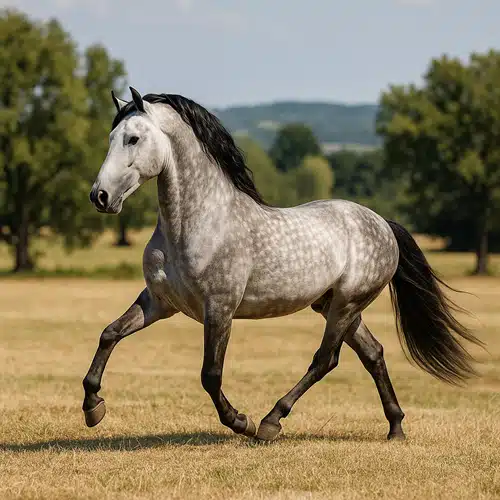
The Holsteiner horse is one of the oldest and most prestigious sport horse breeds originating from Germany. The history of this breed dates back to the 16th century, and its development was closely tied to the Schleswig-Holstein region, where these horses were initially used for fieldwork, carriage driving, and military purposes. Over time, breeding shifted toward producing top-class sport horses, and Holsteiners began to dominate show jumping arenas worldwide.
Today, Holsteiner horses are renowned for their exceptional strength, elasticity, and courage, which have placed them at the forefront of show jumping for decades. It is the Holsteiners that set the standard in this discipline—many Olympic and World Championship medalists have come from this breed.
In addition to their athletic success, Holsteiner horses captivate with their elegant, harmonious conformation and balanced temperament. They are intelligent, ambitious, and mentally stable, making them excellent partners for riders even in challenging competition environments. This is a breed that perfectly combines German breeding precision, sporting power, and beauty in one.
Table of Contents
Origin and History of the Breed
Holsteiner horses originate from northern Germany, specifically from the Schleswig-Holstein region. The first references to this breed date back to the 13th century, when Cistercian monasteries in Uetersen began systematic breeding of horses known for their great strength and endurance. These animals were used for farm work, transportation, and military purposes—their power and resilience were invaluable both on battlefields and in the everyday lives of the region’s inhabitants.
Over the following centuries, Holsteiner breeding was continuously refined. The introduction of oriental, Spanish, and English Thoroughbred blood had a significant impact, adding lightness, elegance, and improving movement quality. As a result, these horses combined the strength of working breeds with the noble characteristics of riding horses.
Zapoznaj się z artykułami:
- Poznaj więcej ras koni. Zapoznaj się dokładnie z ich charakterem, cechami.
- Poznaj konia hanowerskiego – mistrza ujeżdżenia i skoków, który dominuje na arenach całego świata.
- Odkryj konia westfalskiego – wszechstronnego sportowca o łagodnym charakterze i dużych możliwościach.
- Przeczytaj o koniu oldenburskim – rasie cenionej za siłę, elegancję i talent do sportu.
- Dowiedz się, czemu koń arabski uznawany jest za jedną z najpiękniejszych i najbardziej wytrzymałych ras.
In the 19th century, a more organized selection process began, focusing the breed on the needs of the military as well as for working and ceremonial carriage horses. However, the true revolution came in the 20th century, when breeding shifted almost entirely toward equestrian sport. Holsteiners began to dominate in show jumping, and their natural predispositions—strong legs, elasticity, and courage—made them some of the best jumping horses in the world.
Today, the Holsteiner breed is among the most valued and widely exported sport horse breeds. Stud farms in the Schleswig-Holstein region remain the heart of breeding, but these horses are popular across Europe, America, and Asia. Thanks to centuries of careful selection and German breeding precision, Holsteiners form the foundation of many sporting successes and are regarded as one of the true icons of world equestrianism.

Appearance and Conformation
The Holsteiner horse has long been regarded as a model of athletic build and harmonious proportions. Its appearance is the result of careful selective breeding carried out from the 13th century to the present day. From the very first glance, this horse reveals its sporting purpose—powerful, yet full of elegance and lightness.
General Build and Proportions
The Holsteiner typically stands between 165 and 175 cm at the withers, with stallions often reaching the upper end of this range. The body is rectangular, with long lines and excellent balance. The proportions support dynamic takeoff and landing—crucial traits in show jumping.
Head and Neck
Head: Noble, dry, and well-proportioned, with a straight profile and clearly defined poll. Large, expressive eyes give the horse an intelligent expression.
Neck: Long, muscular, and well-set, allowing for natural self-carriage. This helps the Holsteiner maintain balance in motion, making its outline in the dressage arena or show jumping course particularly impressive.
Withers, Back, and Croup
Withers: Broad and well-defined, providing a stable saddle position—vital in sport disciplines where a secure seat is essential.
Back: Straight and strong, smoothly connected to short, solid loins. This structure ensures elasticity, flexibility, and the ability to absorb heavy impact during jumps.
Croup: Muscular and slightly sloping, giving the horse immense power for takeoff and the ability to perform long, dynamic jumps. This is one of the defining characteristics of the Holsteiner breed.
Chest and Limbs
Chest: Deep and capacious, providing excellent stamina and a powerful respiratory system—essential for endurance and sport performance.
Limbs: Dry, strong, with large and well-defined joints. The hooves are hard and well-formed, contributing to durability and resilience under intense training conditions.
Coat Colors and General Appearance
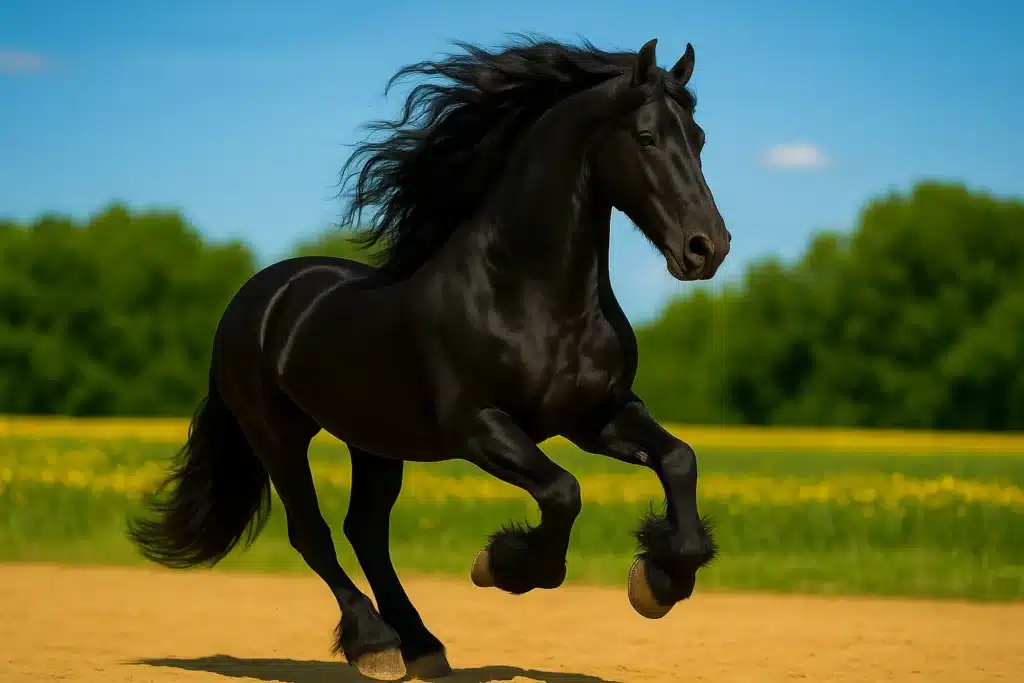
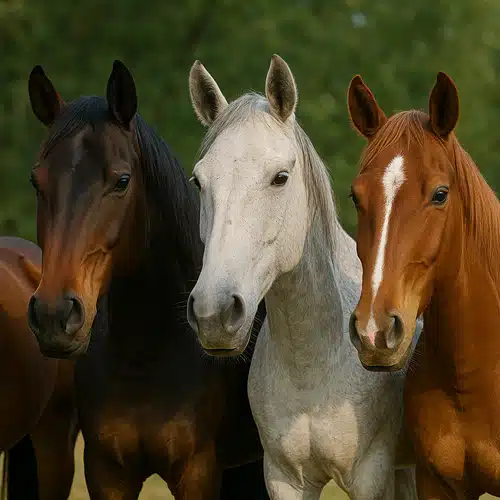
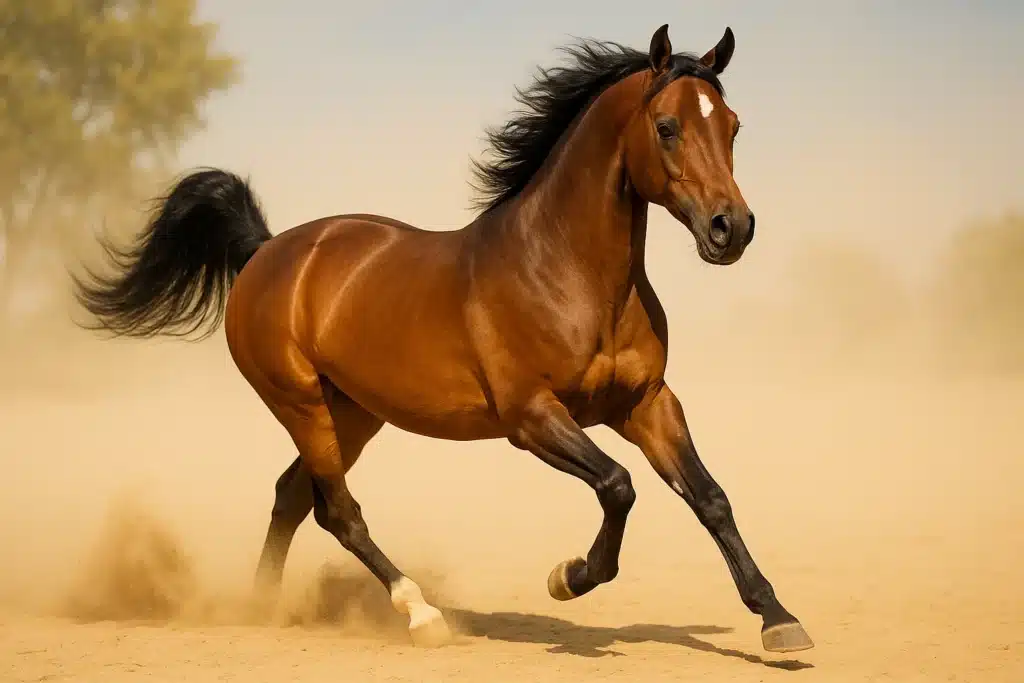
The most common coat colors are bay, black, and gray, with chestnut being less frequent. However, what truly distinguishes Holsteiners is not the color itself but their overall harmony and elegance. They have a majestic presence that naturally draws attention at competitions.
Holsteiner Movement Style
Holsteiners are famous for their energetic, ground-covering movement.
- Trot – Elastic, with strong engagement of the hindquarters and noticeable elevation of the forehand.
- Canter – Even, rhythmic, and exceptionally well-balanced, allowing precise approaches to fences.
- Walk – Free, with long strides and a natural swing of the entire body.
Their gaits are not only visually impressive but, above all, highly functional—each movement reflecting readiness for athletic performance.
Character and Temperament
The Holsteiner horse is not only admired for its impressive build and outstanding athletic potential but also for its remarkable character. Its temperament has played a major role in the breed’s worldwide popularity among top riders.
Intelligence and Willingness to Work
Holsteiners are known for their above-average intelligence. They learn new exercises quickly and retain them easily thanks to an excellent memory. Their willingness to cooperate with humans makes training efficient, with visible progress even in young horses.
Balanced Temperament
These horses are calm and emotionally stable. They are neither nervous nor overly reactive, which sets them apart from many other warmblood breeds. In stressful situations, they remain composed, making them reliable partners in competition environments full of noise, pressure, and excitement.
Ambition and Energy
Despite their calm nature, Holsteiners possess plenty of energy and ambition. They never refuse work; on the contrary—they are highly motivated and eager to perform. This combination creates an ideal balance: a powerful horse that remains easy to control.
Mental Versatility
Their character makes them suitable for both:
- Professional athletes competing at the highest levels, and
- Ambitious amateurs looking for a steady, dependable partner to support their growth.
Holsteiners can be intensely focused during training and competitions but can just as easily relax during rest, allowing for quick recovery.
Relationship with Humans
These horses form strong bonds with their riders. Thanks to their sensitivity and empathy, they can “read” human intentions. Many riders emphasize that a Holsteiner works with its rider almost as a true partner, not merely as a tool for achieving results.
Comparing the Holsteiner’s Character to Other Breeds
- Hanoverian: Hanoverians are similarly intelligent and versatile but often display a softer disposition. They tend to adapt better across disciplines, while the Holsteiner is a jumping specialist—more ambitious and competition-driven.
- Westphalian: Westphalians have a gentler, friendlier temperament, making them ideal for younger or less experienced riders. In comparison, Holsteiners are more energetic and demanding but offer greater athletic potential in skilled hands.
- Oldenburg: Oldenburgs are exceptionally elegant and often chosen for dressage. Compared to them, the Holsteiner is considered more “combative” and dynamic—particularly in the jumping arena.
Use in Sport
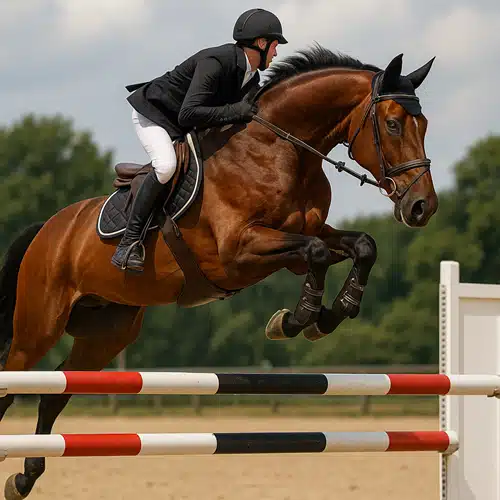
For decades, the Holsteiner horse has been regarded as one of the best show jumping horses in the world. This breed has helped shape modern jumping courses. Thanks to its conformation, strength, and temperament, the Holsteiner is not just a sport horse—it is an icon in the history of show jumping.
Show Jumping – The Crown Discipline
This is where the Holsteiner has achieved its greatest fame. They are characterized by:
- Powerful takeoff, allowing them to clear very high and wide obstacles,
- Excellent distance judgment and spatial awareness, making them reliable partners for the rider,
- Exceptional precision and dynamism, combined with the strength of the hindquarters that give them an advantage over other breeds,
- Mental endurance, enabling them to compete successfully for many years at the top level.
To this day, Holsteiners make up a significant portion of the world’s elite in show jumping—it’s fair to say that they set the standard for modern show jumping.
Dressage – Elegance and Power Combined
Although less numerous in this discipline than Hanoverians or Oldenburgs, Holsteiners also have the potential to shine in the dressage arena. Their strong, athletic build, elastic gaits, and intelligence make them suitable for medium and advanced levels. Lines bred for more lightness and balance are especially valued, as they combine expressive movement with natural self-carriage.
Eventing – Courage and Endurance
While not the most common discipline for Holsteiners, some breeding lines demonstrate excellent aptitude for eventing. These horses can combine jumping power, cross-country agility, and dressage discipline. Their temperament is crucial—only confident and brave horses can succeed in such a demanding tri-discipline sport.
Other Uses
Beyond Olympic disciplines, Holsteiners can also be found in:
- Show jumping exhibitions and breeding presentations,
- Medium-distance riding tours,
- And occasionally in recreational sport for experienced riders—though due to their athletic potential and market value, they are rarely used as leisure horses in the traditional sense.
Movement and Performance Abilities
Holsteiner horses have long been renowned for their efficient, athletic movement—one of the key factors behind their worldwide success in show jumping. Their gaits are marked by power and natural impulsion, especially in the canter, making them excellent partners in disciplines that demand speed, strength, and endurance.
Walk – Free and Rhythmic
The Holsteiner’s walk is:
- Ground-covering and clear, with a distinct four-beat rhythm,
- Relaxed and tension-free, giving the rider a sense of stability,
- Even and consistent, allowing the horse to relax easily and stay attentive to the aids.
This makes the Holsteiner’s walk ideal for dressage as well as for everyday training and working with young horses.
Trot – Elastic and Powerful
The trot of this breed, though less lofty than that of Trakehners or Andalusians, is characterized by:
- Strong engagement of the hindquarters, providing solid impulsion,
- Elasticity and rhythm, which make dressage training easier,
- Ease of collection, thanks to natural balance and flexibility.
It is a functional rather than flashy trot—perfect for disciplines where movement efficiency matters more than visual showiness.
Canter – Strength and Cadence
The canter is undoubtedly the Holsteiner’s greatest strength. It is:
- Powerful and expressive, with a natural cadence,
- Energetic yet easily collected,
- Exceptionally useful in jumping, as the horse can lengthen or shorten the stride without losing rhythm.
These qualities allow Holsteiners to navigate jumping courses with confidence and fluidity, setting them apart from many other breeds.
Performance Abilities
The Holsteiner’s movement is practical and economical, which translates into remarkable versatility. These horses are:
- Exceptionally energy-efficient, maintaining a high work output for long periods without signs of fatigue,
- Naturally balanced, an essential trait for show jumping and eventing,
- Flexible and responsive, reacting well to the aids and quickly adapting to new training demands.
Breeding and Selection
The Holsteiner Breeders’ Association (Holsteiner Verband), headquartered in Elmshorn, is one of the most prestigious breeding organizations in the world. Thanks to its strict selection principles, the breed has maintained its exceptional quality and global reputation.
Selection Criteria
Each horse is evaluated through several stages designed to assess not only conformation but also performance potential. The selection process includes:
- Type and conformation assessment – evaluating body proportions, topline, leg structure, and overall harmony.
- Performance tests – young horses undergo trials both free and under saddle, assessing jumping technique, movement in all three gaits, and responsiveness to aids.
- Character and temperament evaluation – measuring mental stability, willingness to cooperate, and stress resistance.
- Pedigree and progeny analysis – special attention is given to the consistency of desirable traits across generations.
Elite Breeding Lines
Only horses meeting the highest quality standards are approved for breeding. Great emphasis is placed on sire lines with documented histories dating back to the 18th century. Some lineages have become legendary in the world of sport horse breeding:
- Cottage Son xx line – produced horses with tremendous jumping power.
- Capitol I line – one of the most famous, whose descendants have won Olympic medals.
- Cor de la Bryère line – renowned for lightness, quick reflexes, and modern jumping technique.
Stallion Approval Process
Approval of a stallion for breeding is a multi-stage and demanding process. Each candidate must:
- Pass an initial conformation inspection.
- Complete the Körung—the official stallion licensing evaluation.
- Prove his abilities through continued performance in sport or the quality of his offspring.
Why Is Selection So Important?
The Holsteiner Verband has always followed the principle: quality over quantity. Therefore, while the breed is less numerous than Hanoverians, Holsteiners are considered exceptionally valuable. The strict selection ensures that the breed preserves:
- Continuity of top genetic lines,
- A consistent sport horse type,
- Reliable jumping technique,
- And an excellent, cooperative temperament.
Holsteiner Horses in Poland
The Holsteiner breed began gaining popularity in Poland in the 1990s, when more and more breeders started importing horses from Germany and France. The dynamic development of disciplines such as show jumping and dressage created a growing demand for horses with top-quality genetic lines—precisely the kind offered by Holsteiner breeding programs.
Breeding Directions in Poland
Polish breeders focused both on importing purebred Holsteiner stallions and on crossbreeding them with native mares (Hanoverian, Wielkopolski, and Małopolski). The result has been the production of sport horses characterized by:
- A modern type,
- Excellent movement,
- Strong and balanced temperament,
- High versatility in use.
Thanks to this, Poland now has both pure Holsteiner horses and successful crosses with other breeds, which perform excellently in both amateur and professional equestrian sports.
Key Centers and Stud Farms
Among the most notable centers associated with the breeding and use of Holsteiners in Poland are:
- Rzeczna Stud Farm – known for breeding and selling young show jumping horses.
- Nad Wigrami Stud Farm – a breeding center that used Holsteiner stallions to improve the quality of native bloodlines.
- Private studs in Pomerania and Masuria – fast-developing breeding operations importing modern genetics and collaborating with German breeders.
- Sports centers in central Poland – especially around Warsaw and Łódź, where Holsteiners are widely used in professional equestrian sport.
Holsteiners in Polish Sport
Polish Holsteiner horses have been achieving success in sport for many years, competing both nationally and internationally. They particularly excel in:
- Show jumping, where they compete in the Polish Cup and CSI events,
- Dressage, where they are increasingly successful in medium and higher-level classes,
- Breeding inspections for young horses, where they often earn high marks for conformation and movement.
Prospects in Poland
With the growing popularity of equestrian sports, the demand for Holsteiner horses in Poland continues to rise. Many Polish breeding centers are investing in importing breeding stock from Germany, and more Polish riders are choosing this breed as their partner for a successful sporting career.
Famous Holsteiner Horses
Throughout the history of equestrian sport, Holsteiner horses have earned a legendary reputation, becoming icons of show jumping and benchmarks for sport horse breeding. This breed has produced many horses that have permanently shaped the modern face of competitive riding.
The Most Important Horses in the Breed’s History
Casall ASK – One of the most decorated stallions in show jumping history. Ridden by Rolf-Göran Bengtsson, he won the Hamburg Grand Prix and achieved multiple victories in the Global Champions Tour. After his sporting career, he became a leading sire, producing numerous offspring that compete successfully at world finals.
Corrado I – A famous stallion who competed under Franke Sloothaak in the 1990s. Known for his extraordinary jumping power and technique, he passed these qualities on to his progeny. He is the sire of Clinton, the grandsire of the renowned Cornet Obolensky.
Capitol I – One of the pillars of modern show jumping breeding. His offspring are known for their exceptional strength, technique, and temperament. Thanks to Capitol I, Holsteiner bloodlines firmly established themselves among the world’s elite. He produced numerous outstanding stallions and mares that continue to shape breeding today.
Classic Touch – A mare who made history as the Olympic gold medalist in Barcelona in 1992. Ridden by Ludger Beerbaum, she demonstrated that Holsteiner horses are not only capable of competing but of winning the most prestigious titles in the world.
Carthago Z – A stallion who represented Ludger Beerbaum at the Olympic Games in Atlanta (1996) and Sydney (2000). Renowned for his exceptional endurance and courage in the arena, he later became one of the most influential sires, producing many world-class jumping horses.
Other Famous Holsteiners
In addition to the legends above, other notable stars include:
- Constitution – A classic foundation sire known for passing on strength and character.
- Caretino – An exceptional stallion whose offspring succeed on jumping arenas around the world.
- Calido I – A stallion whose descendants compete in World Cup finals and the Olympic Games.
- Cardento – Team silver medalist at the 2004 Athens Olympics with Peter Eriksson, and a highly valued breeding stallion.
Legacy
Thanks to these horses, the Holsteiner breed has earned a legendary status in show jumping. Their achievements made the horses from Schleswig-Holstein some of the most sought-after in stud farms worldwide. To this day, their offspring continue to set the standard for excellence in modern sport horse breeding.
The Holsteiner Compared to Other Horse Breeds
Holsteiner vs Hanoverian
Both breeds originate from German warmbloods and are valued for their versatility in sport. The Hanoverian tends to be more massive and steady, often used in both show jumping and dressage. The Holsteiner, on the other hand, is more refined, with a slimmer build, excellent movement, and outstanding genetic predispositions for show jumping.
Holsteiner vs Thoroughbred
The Thoroughbred is a specialist in speed and racing—light, aerodynamic, and built for endurance at high velocity. The Holsteiner, while also dynamic, is more muscular, with superior balance and durability, making it more versatile for disciplines such as show jumping, dressage, and eventing.
Holsteiner vs Paso Fino
The Paso Fino is famous for its naturally smooth, gaited movement, offering an exceptionally comfortable ride. The Holsteiner does not have a special gait, but compensates with remarkable athletic potential—its powerful canter, strength, and dynamism make it ideal for demanding sporting competitions.
Holsteiner vs Rocky Mountain Horse
The Rocky Mountain Horse is known for its gentle, family-friendly temperament and smooth single-foot gait. The Holsteiner, by contrast, is a true sport horse—energetic, ambitious, and demanding. While the Rocky Mountain offers comfort and calmness, the Holsteiner delivers power and top-level athletic ability.
Holsteiner vs American Saddlebred
The American Saddlebred is a showy, elegant breed, excelling in presentation and expressive gaits. The Holsteiner’s movement is less flamboyant, but its sporting nature, jumping ability, and dynamism make it far more functional in Olympic-level disciplines.
Health Issues and Care
Although Holsteiner horses are among the strongest and most resilient sport breeds, their intense physical use requires special attention to their health and overall condition.
Most Common Health Problems
Tendon and ligament injuries – Typical among sport horses that regularly jump high obstacles. These issues often affect the forelegs, especially when the horse is overworked or trained on unsuitable footing.
Hock and fetlock joint injuries – Result from the tremendous takeoff power and frequent landings during jumping. Regular veterinary check-ups, joint supplements, and proper recovery routines greatly reduce the risk of such injuries.
Metabolic problems – An unbalanced diet, excessive energy intake, or poor supplementation can lead to laminitis, colic, or decreased performance levels.
Overexcitability and stress – Holsteiners have a lively temperament and high energy levels. Without regular training and turnout, they may become nervous or anxious, increasing the likelihood of injuries.
Care and Prevention
To allow a Holsteiner to reach its full potential, it is essential to provide:
- A proper diet – Based on high-quality hay, concentrate feeds suited to training intensity, and supplements that support joints, muscles, and the cardiovascular system.
- Systematic veterinary care – Regular check-ups, vaccinations, deworming, and early intervention at the first signs of health problems.
- Proper training surfaces – Working on well-prepared footing minimizes the risk of tendon and joint injuries. Surfaces that are too hard or too deep are particularly hazardous.
- Regular hoof trimming and shoeing – Strong hooves are one of the breed’s advantages, but sport horses require professional shoeing, often with orthopedic shoes for optimal performance and protection.
- Rest and recovery – Despite their endurance, Holsteiners need downtime, massages, stretching, and hydrotherapy to maintain health and stamina.
The Holsteiner horse is an excellent choice for those seeking a powerful, courageous, and elegant sport horse. In capable hands, it becomes a partner ready to compete at an international level. However, it requires professional care and consistent training to fully realize its potential and avoid overstrain.
Zapoznaj się z artykułami:
FAQ
Is the Holsteiner Horse Suitable for Beginners?
No. It is a horse best suited for advanced riders or competitive athletes.
Can You Buy a Holsteiner in Poland?
Yes. Many stud farms and breeders in Poland offer horses of this breed.
What Is the Price of a Holsteiner Horse?
From around 40,000 PLN for young horses to several hundred thousand PLN for competition-ready horses.
Are Holsteiner Horses Suitable for Dressage?
Yes, but mainly for intermediate-level classes. They are more commonly chosen for show jumping.
Is the Holsteiner Horse Suitable for Eventing?
Some bloodlines are, but overall, the breed is less commonly chosen for this discipline.