
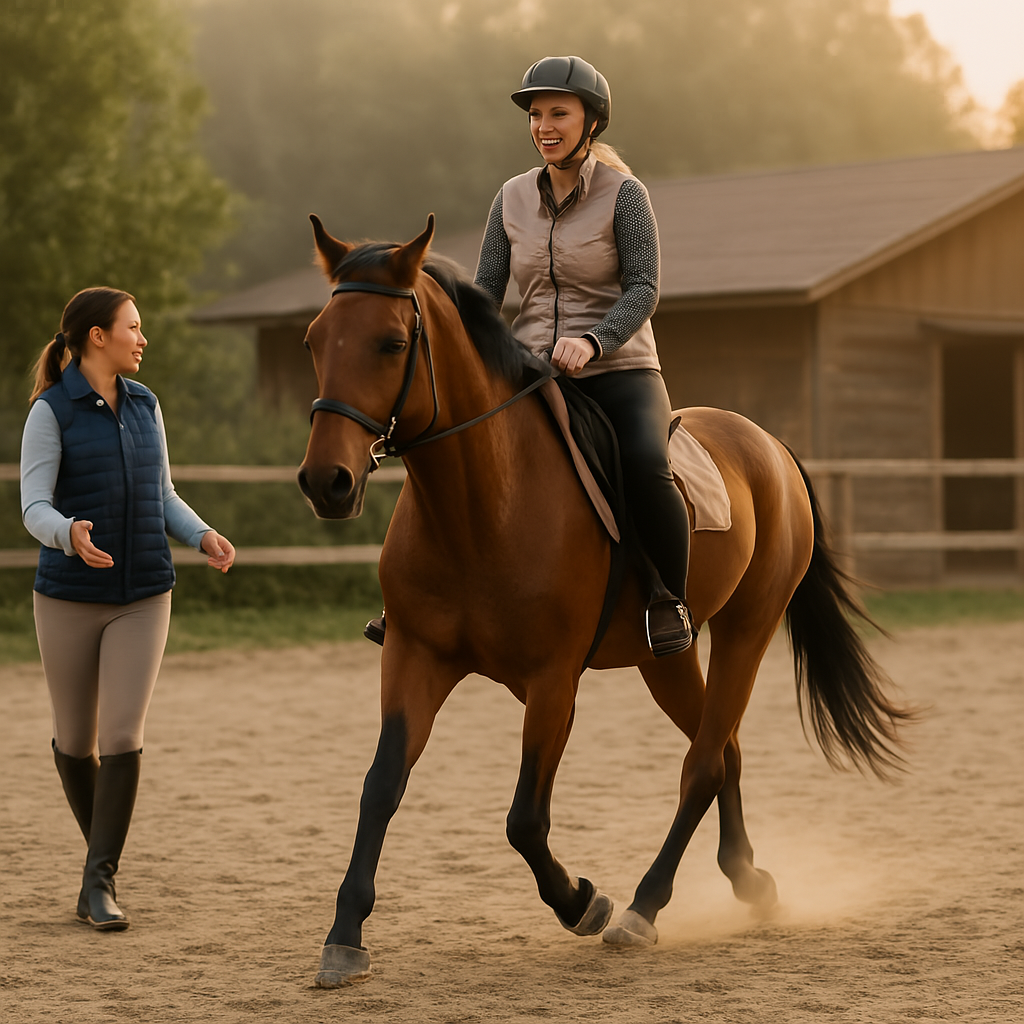
Poland is a country of exceptional landscapes, perfectly suited for equestrian tourism. Its diverse terrain, numerous nature reserves, forests, and mountain trails make horseback riding an unforgettable experience. In recent years, the number of horse trails available to tourists has been steadily increasing.
In this article, we take a closer look at the most beautiful horseback riding routes in Poland, how to prepare for your journey, and which places are especially worth visiting. We also highlight the role of the Polish Tourist and Sightseeing Society (PTTK) and outline the key regulations every rider should know before setting off on a trail.
Table of Contents
Horse Trails in Poland – What You Should Know
Horse trails are designated routes where horseback riding is legally permitted. In Poland, an increasing number of routes are being marked specifically as horse trails. Depending on the region, these paths lead through forests, nature reserves, fields, and agritourism areas.
A horse trail differs from other types of trails in that it is adapted for horses — it features appropriate signage, terrain, and infrastructure. Currently, there are hundreds of kilometers of horse trails across the country — from Pomerania and the Masurian Lake District to the Carpathian Mountains.
The Most Beautiful Horse Trails According to PTTK
The Polish Tourist and Sightseeing Society (PTTK), as an institution promoting active tourism, also supports the development of horse trails. In cooperation with local riding clubs and associations, it designates equestrian routes that hold not only recreational but also historical value.
Some of the most beautiful include:
- The Beskid Sądecki Horse Trail, which leads through picturesque forests and mountains,
- The Eagle Nests Trail, allowing riders to explore the surroundings of medieval castle ruins,
- The Tourist Horse Trail in the Tuchola Forest, perfect for families with children.
These routes are well-prepared — properly marked and described in official guidebooks.
Zapoznaj się z artykułami:
Where to Go Horseback Riding in Poland?
Poland offers many regions that are perfect for equestrian tourism and recreation. Here are some of the most interesting ones:
? Bieszczady Mountains – wild mountains, open meadows, and endless spaces. A paradise for experienced riders, especially those who enjoy multi-day treks. The trails are challenging, but the breathtaking views make it all worthwhile.
? Masuria (Mazury) – gentle hills, lakes, and fragrant forests. This region is ideal for family-friendly horseback riding. Many agritourism farms here offer accommodation and guided trail rides.
? Kampinos Forest (Puszcza Kampinoska) – located near Warsaw. The buffer zone of the national park allows for peaceful, legal horseback riding. It’s a perfect spot for one-day trips and for learning to ride outdoors.
? Beskid Sądecki Mountains – a mountainous area with more demanding routes. Trails lead through dense forests, mountain passes, and valleys. Ideal for intermediate and advanced riders.
? Lower Silesia (Dolny Śląsk) – a unique blend of castle ruins, mountain trails, and forest paths. Here you can explore historic sites on horseback while enjoying mountain landscapes.
? Beskid Żywiecki – becoming increasingly popular among horseback riding enthusiasts. Trails run through valleys, passes, and alpine meadows. Many stables and agritourism centers offer guided riding tours, especially around Pilsko and Korbielów.
? Kraków-Częstochowa Upland (Jura Krakowsko-Częstochowska) – a region full of limestone cliffs and caves. Numerous marked horse trails pass through areas like Ojców and Ogrodzieniec Castle. Riding here is a true adventure — rocky paths, scenic views, and historic ruins will leave you amazed.
? Beskid Śląski Mountains – a well-developed equestrian base and picturesque routes. Around Wisła and Szczyrk, you’ll find many stables offering trail rides for all levels of riders.
? Pieniny Mountains – a mountainous region near the Slovak border. Horseback expeditions through the Dunajec Gorge, meadows, and forest roads provide unforgettable experiences and stunning views. In the areas of Szczawnica and Krościenko, riding centers organize guided treks.
? The Longest Horse Trail in Poland – The Drawsko Lake District Horse Trail stretches over 400 km, making it one of the longest and best-marked in the country. It runs through the West Pomeranian Voivodeship, including Natura 2000 areas, nature reserves, and forests. It offers full infrastructure for horses and riders — resting points, accommodation, and service areas.
? International Horse Trail – The Transboundary Carpathian Horse Trail runs along the border regions of Poland, Slovakia, and Ukraine. This unique international route connects the Bieszczady Mountains with the Eastern Carpathians, allowing riders to traverse vast meadows, forests, and mountain peaks while discovering the rich cross-border culture. Advance planning and knowledge of border regulations are essential.
Rules and Regulations
Not every route is open to horses. Before setting out on a trail, it is essential to check the regulations for a given forest, reserve, or route. In State Forests (Lasy Państwowe), horseback riding is allowed only on designated trails. In national parks and nature reserves, horseback riding is prohibited — except on officially marked routes.
The regulations for each trail should be available in guidebooks or on the official websites of PTTK or the Forest District Office (Nadleśnictwo).
zachęcamy do zapoznania się z artykułem: Working Equitation – na czym polega wszechstronna jazda robocza i czy warto ją trenować?
How to Prepare for a Horseback Riding Trek
When setting out on a horse trail, safety should always come first. You will need:
- a helmet and protective vest,
- a suitable saddle (trail or endurance type),
- a first-aid kit and supply of water,
- a phone with GPS and a map of horse trails.
Your horse must be in good condition — ready for several hours of riding. Prior training sessions and shorter test rides are highly recommended. Accommodation should be planned in a horse-friendly stable or agritourism farm, and more and more such places offer comprehensive services for equestrian tourists.
Horse trails in Poland are a wonderful option for anyone who loves riding in nature. These journeys combine adventure, activity, and a close connection with the outdoors. Well-maintained routes, PTTK guides and services, and local initiatives make equestrian tourism in Poland grow at a galloping pace. Learn the rules, prepare well, and hit the trail — Poland on horseback awaits!
FAQ
Can You Legally Ride a Horse in Polish Forests?
Yes, but only on designated horse trails within state forests. Riding outside of these marked routes may result in a fine.
Where Can I Find the Official List of PTTK Horse Trails?
The best way is to visit the official PTTK website or contact a local PTTK branch. Many routes are also described in regional guidebooks.
Can You Stay Overnight with Your Horse on a Trail?
Yes, many agritourism farms and stables offer accommodation for both riders and their horses. It’s best to book in advance.
How Are Horse Trails Marked in Poland?
They are most commonly marked with an orange circle featuring a black rider. In forests, you’ll also often find directional signs and information boards along the routes.
Can You Ride Horses in National Parks?
Horseback riding is prohibited in national parks, except on designated trails.
Example: the buffer zone of the Kampinos Forest (Puszcza Kampinoska).
Which Horse Trail Is the Longest in Poland?
One of the longest is the Trans-Beskid Horse Trail (Transbeskidzki Szlak Konny PTTK), which runs through the Beskid Mountains and stretches for over 600 kilometers.
Are There Any International Horse Trails?
Yes, for example, the International Carpathian Horse Trail, which runs through Poland, Slovakia, and Ukraine. It allows for multi-day horseback expeditions across borders.