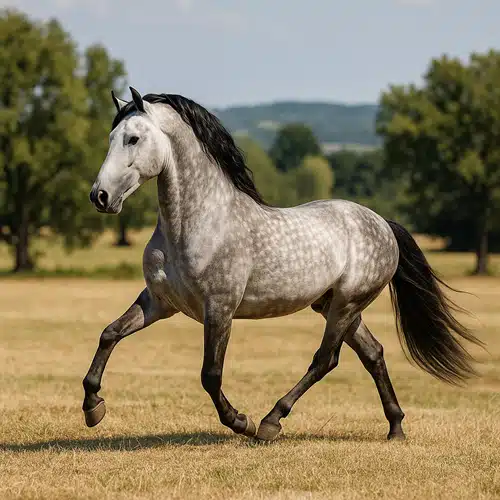
The Oldenburg horse is one of the most highly valued warmblood breeds in Europe and worldwide. For decades, it has been regarded as a symbol of strength, elegance, and sporting versatility. Although its origins date back to the 17th century, when it was primarily a carriage and workhorse, today the Oldenburg is a true modern sport horse—used in show jumping, dressage, and eventing.
This breed combines powerful movement, harmonious conformation, and an exceptional temperament. Oldenburgs are known for their strong, athletic build and dynamic gaits that impress both judges and spectators at major equestrian competitions. Thanks to careful selective breeding, these horses also stand out for their stable minds and intelligence, making them highly cooperative with riders and well-suited for every level of training.
Today, the Oldenburg horse is among the most sought-after sport horses in Europe, frequently found in the stables of top competitors and playing a key role in the global development of warmblood breeding. It is a breed that bridges tradition and modernity—its representatives have repeatedly proven their worth by achieving success on Olympic arenas and at World Championships.
Table of Content
Origin and History of the Breed
The Oldenburg horse originates from northwestern Germany, specifically from the region of Oldenburg, which for centuries was renowned for its breeding of utility horses. Initially, the breed developed as a carriage and workhorse, used both for transportation and agricultural purposes. Breeding focused on traits such as strength, massiveness, and a calm temperament, which made Oldenburgs reliable, durable, and easy to handle.
For a long time, they were considered some of the best carriage horses in Europe. In the 17th and 18th centuries, they were highly popular among the aristocracy, as they were perfectly suited for elegant carriages. Known for their proud posture, expressive movement, and majestic appearance, they became a symbol of prestige and high social standing.
Zapoznaj się z artykułami:
- Poznaj więcej ras koni. Zapoznaj się dokładnie z ich charakterem, cechami.
- Poznaj konia hanowerskiego – jednego z najlepszych koni sportowych, który dominuje w ujeżdżeniu i skokach.
- Dowiedz się, dlaczego koń holsztyński jest jedną z najcenniejszych ras w świecie skoków przez przeszkody.
- Odkryj konia westfalskiego – wszechstronnego, spokojnego i stworzonego do sportu.
- Przeczytaj o koniu arabskim – rasie, która od wieków inspiruje hodowców i jeźdźców na całym świecie.
With the arrival of the 19th century, societal needs began to change. The growth of cities, trade, and—most importantly—equestrian sports led to a gradual transformation of carriage horses into riding horses. A key role in this process was played by crossbreeding with Thoroughbreds, Trakehners, and Holsteiners. As a result, Oldenburgs gained lightness, refinement, and more dynamic movement while retaining their characteristic strength and steady temperament.
In 1923, the Oldenburg Horse Breeders’ Association (Oldenburger Pferdezuchtverband) was founded, and it continues to oversee the breed to this day. The organization introduced strict breeding standards to ensure high quality and consistency. Modern Oldenburgs are therefore the product of generations of selective breeding, combining the best traits of various bloodlines into one cohesive type of modern sport horse.
Today, the Oldenburg horse is not only the pride of the Oldenburg region but also one of the most recognizable warmblood breeds in the world. Its history demonstrates how a working horse can evolve into one of the finest sport horses, capable of competing at the highest levels.

Appearance and Conformation
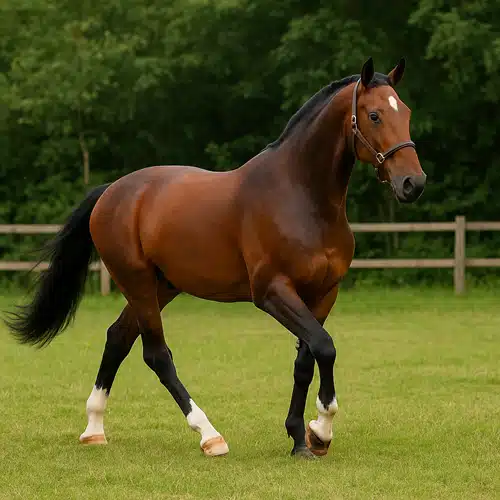
The Oldenburg horse is among the largest and most impressive warmblood breeds. At first glance, it makes a striking impression with its height, powerful physique, and athletic presence. Its appearance immediately suggests strength, athletic potential, and the elegance characteristic of modern riding horses.
Body and Proportions
- Height at the withers: typically between 165 and 178 cm, making it one of the tallest sport horse breeds.
- Head: proportionate, with a noble profile and large, expressive eyes that highlight the horse’s intelligence and alertness.
- Neck: long, arched, and well-muscled, set high, giving the Oldenburg a proud posture and elegance in motion.
- Chest: deep and capacious, ensuring excellent lung capacity and endurance during prolonged effort.
- Back: straight, strong, and well-muscled, providing solid support for both the saddle and the dynamic movements required in dressage and jumping.
- Croup: massive, broad, rounded, and muscular—a key feature responsible for powerful takeoffs in jumping and energetic forward movement.
- Legs: long, dry, and very strong, with well-developed joints and hard hooves that provide durability even under significant athletic strain.
Coat Colors
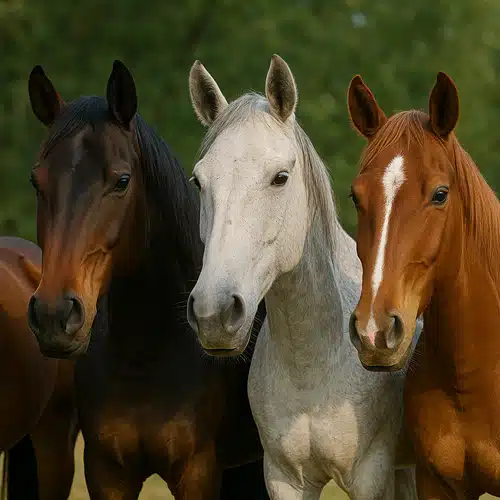
The most common coat colors are:
- Bay,
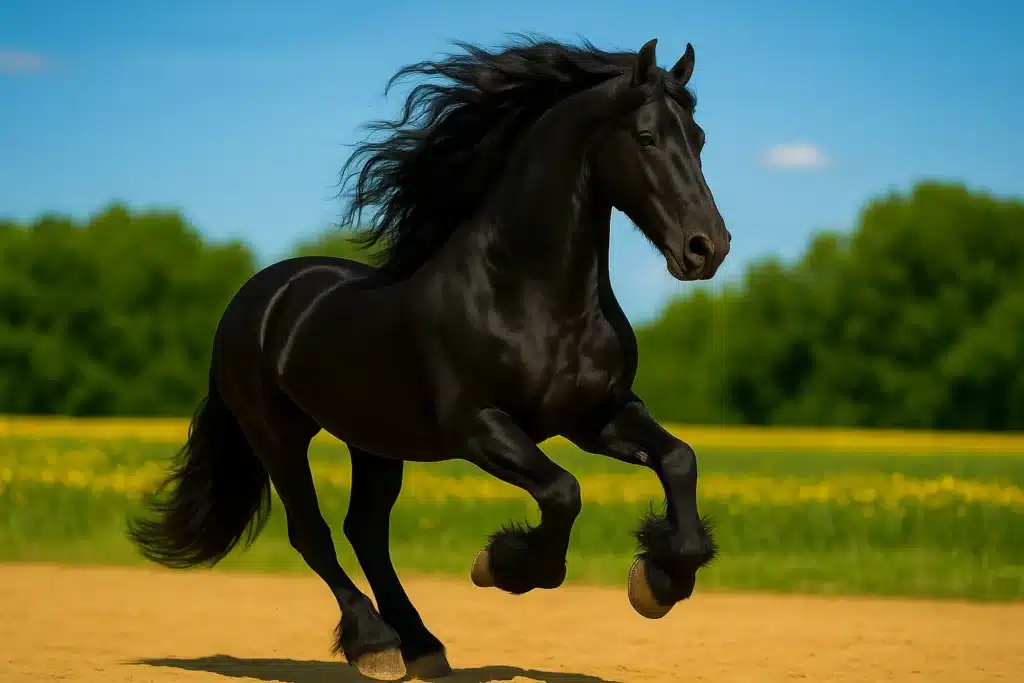
- Black,
- Chestnut,
- Gray.
Other shades occur less frequently, but these classic colors emphasize the breed’s refined and elegant appearance.
General Impression
The Oldenburg’s silhouette combines power and elegance. It is an athletic yet not heavy horse—harmoniously built and exceptionally impressive in motion. Its balanced proportions and solid conformation make it equally suited for disciplines requiring strength as well as those emphasizing precision and fluidity.
The modern Oldenburg is a perfect example of how the massiveness of traditional carriage horses can be blended with the lightness and grace of warmblood sport horses. It’s no wonder that the Oldenburg is often described as one of the most beautiful horses in Europe.
Character and Temperament
The Oldenburg horse combines calmness and composure with high energy and sporting ambition. These qualities make it highly valued by both professional competitors and dedicated amateurs.
Intelligence and Willingness to Cooperate
Oldenburgs are renowned for their intelligence. They learn new tasks quickly and easily adapt to their rider’s expectations. Training with them is highly rewarding—they respond sensitively to subtle aids and progress alongside their rider’s development.
Balance and Mental Resilience
Despite their physical power, these horses are generally calm and composed. They handle stressful situations well, which is especially important in competition environments where crowds, noise, and pressure can influence behavior. Their stable temperament provides riders with a strong sense of security, whether in the dressage arena or on the jumping course.
Friendly Disposition
Oldenburgs are often described as gentle and friendly horses. They enjoy human interaction, making them excellent partners not only in sport but also in recreational riding and working with young riders. They tend to form strong bonds with their handlers and are known for their loyalty.
Power That Requires Consistency
Although calm and cooperative, Oldenburgs are powerful and energetic animals. They require a consistent, confident rider who can set clear boundaries and guide their training thoughtfully. In skilled hands, their full potential shines—displaying elegance in dressage and tremendous strength in show jumping.
Use in Sport
The Oldenburg horse is one of the most versatile sport horses in Europe. Its conformation, movement, and temperament make it suitable for nearly every Olympic discipline, as well as for competitive driving. Because of this, it is a popular choice among both professional athletes and ambitious amateurs.
Dressage
Oldenburgs are considered among the best horses for dressage. They are known for their harmonious movement, excellent balance, and natural ability to collect. Their trot is elevated and elastic, while their canter is balanced and powerful, allowing them to perform the most demanding Grand Prix movements such as piaffe, passage, and pirouettes.
On the international stage, Oldenburgs consistently earn high scores and medals. Their movement is not only visually impressive but also highly functional for the rider—comfortable to sit, which provides an advantage in precision riding.
Show Jumping
Although slightly more substantial than Holsteiners or Westphalians, Oldenburgs successfully compete in show jumping. Their powerful takeoff, excellent sense of distance, and bravery make them reliable partners in the arena. They combine strength and dynamism with precise technique, excelling in both speed rounds and Grand Prix competitions. Many Oldenburgs have made their mark in jumping history, proving that the breed can compete with the world’s best jumping lines.
Eventing
Eventing is one of the most demanding equestrian disciplines, and while Oldenburgs are not a typical “cross-country” breed, they are capable of performing well. Their stamina, courage, and balance allow them to succeed in the dressage, cross-country, and jumping phases. The best eventing Oldenburgs tend to come from lighter lines with a higher percentage of Thoroughbred blood, enhancing endurance and agility.
Driving
One must not forget the breed’s origins. Oldenburgs were once prized carriage horses, and many still excel in competitive driving today. Their strength, presence, and expressive movement make them ideal for driving sports—whether in four-in-hand competitions or exhibitions. Their majestic appearance also makes them a favorite choice for traditional carriage displays, where elegance and harmony are key.
Movement and Athletic Abilities
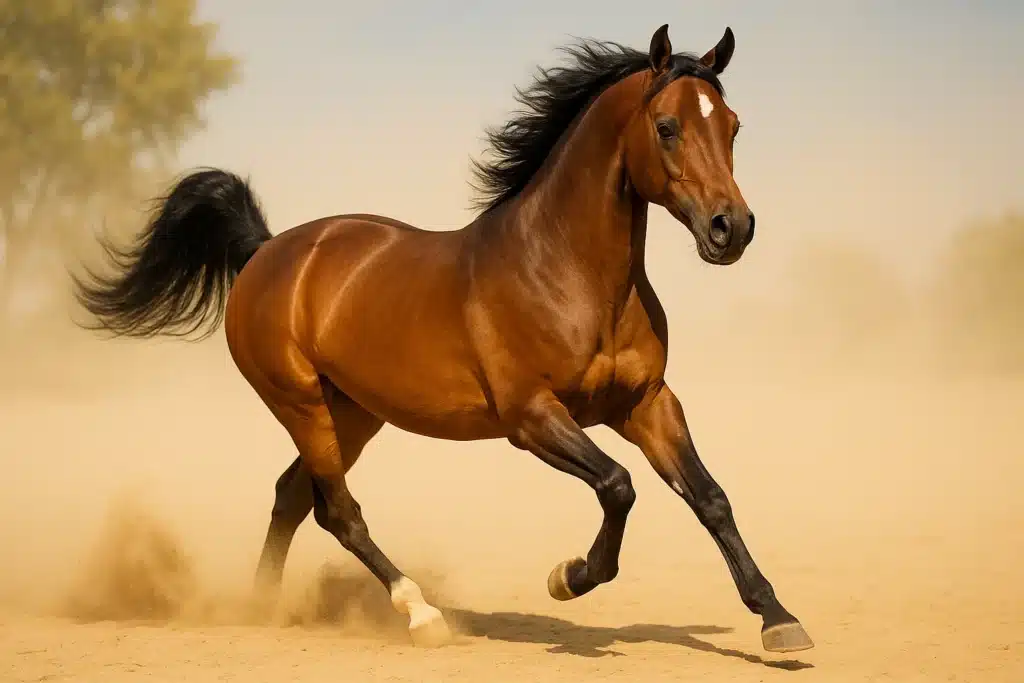
The movement of the Oldenburg horse is a blend of power, elasticity, and elegance, making this breed one of the most sought-after in the world of equestrian sport. These horses move with remarkable expression while maintaining perfect rhythm and balance. Their gaits are fluid, expansive, and highly impressive—captivating both judges and spectators alike.
Walk
The Oldenburg’s walk is wide, rhythmic, and relaxed. These horses naturally lengthen their stride, a quality highly valued in dressage. Thanks to their excellent movement mechanics, their walk is never stiff or restricted—the horse moves willingly forward while maintaining balance and suppleness through the back.
Trot
The trot is the Oldenburg’s most distinctive gait—elevated, elastic, and dynamic, with powerful engagement from the hindquarters and active leg action. Many Oldenburgs possess ideal “dressage mechanics,” offering movement that is both spectacular and functional. This allows them to perform the most advanced movements—such as passage and piaffe—with grace, rhythm, and lightness.
Canter
The Oldenburg’s canter is strong, efficient, and full of energy. These horses naturally maintain balance and show a clear moment of suspension. As a result, their canter is not only visually impressive but also economical in effort, a key advantage in both dressage and jumping. Their powerful hindquarters and excellent coordination enable precise takeoffs and confident landings over fences.
Versatility of Movement
What truly sets Oldenburgs apart is their versatility in motion. Their gaits are expressive enough to shine in the dressage arena, yet efficient and practical for jumping or eventing. They combine aesthetic brilliance with athletic functionality, making them complete, well-rounded horses admired across all equestrian disciplines.
Comparison of the Oldenburg Horse with Other Breeds
The Oldenburg horse is often compared with other German warmblood breeds that share similar origins and are equally valued in sport. Although these breeds stem from the same breeding traditions, they differ in conformation, temperament, and athletic aptitude.
Oldenburg vs. Hanoverian
Hanoverians are considered the most versatile sport horses, excelling in show jumping, dressage, and eventing. Oldenburgs, on the other hand, are typically larger and more powerful, impressing with their strength and presence. While the Hanoverian is often the “classic” choice for balanced versatility and dressage, the Oldenburg is more commonly associated with disciplines that emphasize power, movement, and expression.
Oldenburg vs. Westphalian
Westphalians are known for their friendly temperament and high adaptability. They are popular among both professionals and less experienced riders due to their cooperative and even-natured disposition. Oldenburgs can be more demanding—their strength and energy make them better suited to riders with experience. In return, they offer more expressive movement and an impressive appearance in the arena.
Oldenburg vs. Holsteiner
Holsteiners are a breed clearly associated with show jumping. They are known for their powerful takeoff, bravery, and precision on the course. Oldenburgs, however, are more well-rounded, excelling not only in jumping but also in dressage and driving. In short, the Holsteiner is the specialist, while the Oldenburg is the versatile athlete.
Oldenburg vs. Trakehner
Trakehners are distinguished by their lightness and refinement. They tend to be more sensitive and require a gentler, more patient approach. Their greatest strengths are precision and elegance of movement. The Oldenburg, being heavier, stronger, and more mentally stable, is more often chosen by competitive riders aiming for top results in dressage and show jumping.
Breeding and Selection
The breeding of Oldenburg horses is among the most prestigious and advanced in the world. For decades, it has been supervised by the Oldenburg Horse Breeders’ Association (Oldenburger Pferdezuchtverband), which enforces strict standards to ensure the consistently high quality of the breed.
Selection Criteria
Every horse submitted for breeding undergoes a multi-stage evaluation process, which includes:
- Type, conformation, and movement assessment – a detailed analysis of body proportions, build quality, and the dynamics of the horse’s gaits.
- Performance and utility tests – young horses are evaluated both under saddle and at liberty to determine their athletic potential.
- Stallion licensing – a highly prestigious event where stallions are presented in-hand, at liberty, under saddle, and over jumps. Only the very best earn a breeding license.
- Foal evaluations – from the earliest age, foals are assessed to identify individuals with the highest potential for sport.
- Veterinary and X-ray examinations (RTG) – comprehensive joint imaging and health assessments are standard, reducing the risk of hereditary locomotor issues.
Breeding Lines and Crossbreeding
The breeding program is based on the best Oldenburg bloodlines, but it also allows controlled infusion of other warmblood breeds—such as Hanoverian, Westphalian, or Trakehner—to enhance movement quality, conformation, and athletic versatility. This selective crossbreeding keeps the breed strong, adaptable, and modern.
A Modern Approach to Breeding
The Breeders’ Association focuses not only on appearance and movement, but also on:
- Stable temperament,
- Strong health and resilience,
- Heritability of desirable traits.
As a result, the Oldenburg has become a highly predictable breed in terms of performance—the offspring of top-performing stallions and mares often achieve comparable success in sport.
Oldenburg Horses in Poland
Oldenburg horses have been present in Poland for many years, although their population is smaller compared to Hanoverians or Wielkopolski horses. They are most often imported from Germany, Belgium, and the Netherlands, where many renowned breeding programs collaborate with Polish sport stables and owners.
Popularity and Use
In Poland, Oldenburgs are appreciated for their athletic versatility and impressive appearance. They are increasingly seen in dressage arenas, show jumping courses, and young horse championships. Polish riders choose them for their:
- Dynamic movement – highly valued in dressage,
- Power and courage – essential for show jumping,
- Good temperament – making them easy to handle for both professionals and ambitious amateurs.
Breeding in Poland
Although Oldenburgs are not bred as extensively in Poland as, for example, Hanoverians, there are several private breeders investing in the development of this breed. Breeders import licensed stallions from Germany or use semen from top international sires, ensuring that the Polish Oldenburg population maintains a high standard of quality and performance potential.
Competition Success
Oldenburg horses competing in Poland regularly participate in:
- National events, including the Polish Championships and Regional Cups,
- International FEI competitions in dressage and show jumping.
Many of them achieve excellent results, proving that Oldenburgs can successfully rival the best horses from other leading German bloodlines.
Famous Oldenburg Horses
Throughout the history of sport and breeding, the Oldenburg horse has produced many outstanding individuals who have profoundly influenced the world of dressage and warmblood breeding.
Bonfire
One of the most famous Oldenburgs in history, Bonfire was the legendary partner of Dutch rider Anky van Grunsven, with whom he won Olympic gold in dressage. His elegance, expressive movement, and charismatic presence made him an icon of the sport, and his performances remain legendary to this day.
Sandro Hit
An exceptional dressage stallion and one of the most influential sires of the modern era. His offspring have regularly triumphed at the Bundeschampionate (German Young Horse Championships) and on international stages. Sandro Hit is often called “the father of the modern dressage horse”, having passed on lightness, expressiveness, and an advanced movement mechanism to his progeny.
Don Schufro
A legendary stallion who played a key role in Oldenburg breeding. He sired numerous outstanding sport horses, including Olympic and World Championship medalists. Don Schufro was especially valued for transmitting a steady temperament, strong back, and powerful hindquarters, traits that make his offspring highly prized in dressage circles.
Sir Donnerhall
Another stallion whose influence on the Oldenburg breed is immeasurable. Known as the sire of many Bundeschampionate finalists, he has become synonymous with quality and elegance in movement. His descendants are among the most popular choices for dressage riders worldwide, continuing his legacy of refinement and excellence.
Care and Health
Despite their size and powerful build, Oldenburg horses are considered relatively hardy and durable. A well-managed Oldenburg can remain active in sport for many years, provided it receives proper care, a balanced diet, and regular, well-planned training suited to its capabilities.
Most Common Health Issues
Due to their large frame and intense athletic use, Oldenburgs may be prone to certain conditions:
- Leg strain – particularly affecting tendons and joints when training loads are too heavy,
- Joint problems – larger horses may be more susceptible to arthritis or degenerative conditions,
- Sensitivity to dietary changes – like many sport horses, Oldenburgs require a stable and well-balanced diet,
- Risk of injuries – especially if the horse is not properly warmed up or given sufficient recovery time.
Prevention and Care
To ensure a long, healthy sporting career, an Oldenburg horse needs:
- A proper diet – rich in protein, vitamins, and minerals supporting the musculoskeletal system,
- Regular supplementation – especially joint and recovery-support formulas,
- Consistent veterinary care – including routine check-ups and preventive X-rays for sport horses,
- Balanced training – maintaining harmony between effort and rest,
- Appropriate footing – soft, elastic surfaces in the stable and arena to minimize injury risk.
The Oldenburg horse is a breed for discerning riders—strong, composed, and graceful. Excelling in dressage, show jumping, eventing, and driving, it represents the perfect balance of power and elegance. Its rich history, versatility, and reliable temperament make it one of the most respected sport horse breeds in the world.
For riders who value not only athleticism and strength but also partnership and loyalty, the Oldenburg is an ideal choice and a faithful companion for many years.
Zapoznaj się z artykułami:
FAQ
Is the Oldenburg horse suitable for young riders or juniors?
Yes, but mainly for those who already have some experience. Due to its size and strength, the Oldenburg requires a balanced seat and consistent handling. When paired with an experienced trainer, it can be an ideal partner for ambitious junior riders.
What are the main bloodlines of Oldenburg horses?
The leading bloodlines in Oldenburg breeding descend from stallions such as Sandro Hit, Don Schufro, Sir Donnerhall, and Quattro B. These lines vary in their athletic focus—some are better suited for dressage, while others excel in show jumping. When choosing an Oldenburg, it’s important to consider the pedigree carefully, depending on the intended purpose of the horse.
Większość oldenbHow long can an Oldenburg horse compete in sport?
Most Oldenburgs reach full physical maturity around the age of 6–7 yea and can compete at a high level until they are about 16–18 years old. With proper care and moderate training intensity, some horses remain active even beyond the age of 20.
What type of training surface is best for an Oldenburg horse?
Due to their more substantial build, Oldenburg horses require a springy surface with good shock absorption. The ideal footing is sand mixed with textile fibers or geotextile, which provides elasticity and stability. Surfaces that are too hard or too deep increase the risk of injuries to tendons and joints.
Is the Oldenburg horse suitable for competitive driving?
Yes. Some Oldenburgs—especially those from heavier lines—perform exceptionally well in single and four-in-hand driving. Their strength, rhythmic movement, and impressive presence make them popular choices for this discipline, including at international competitions.