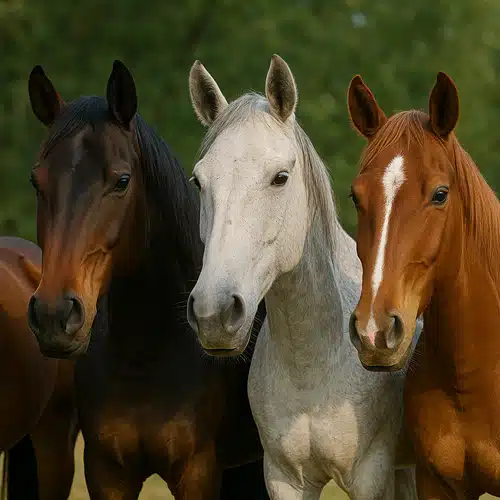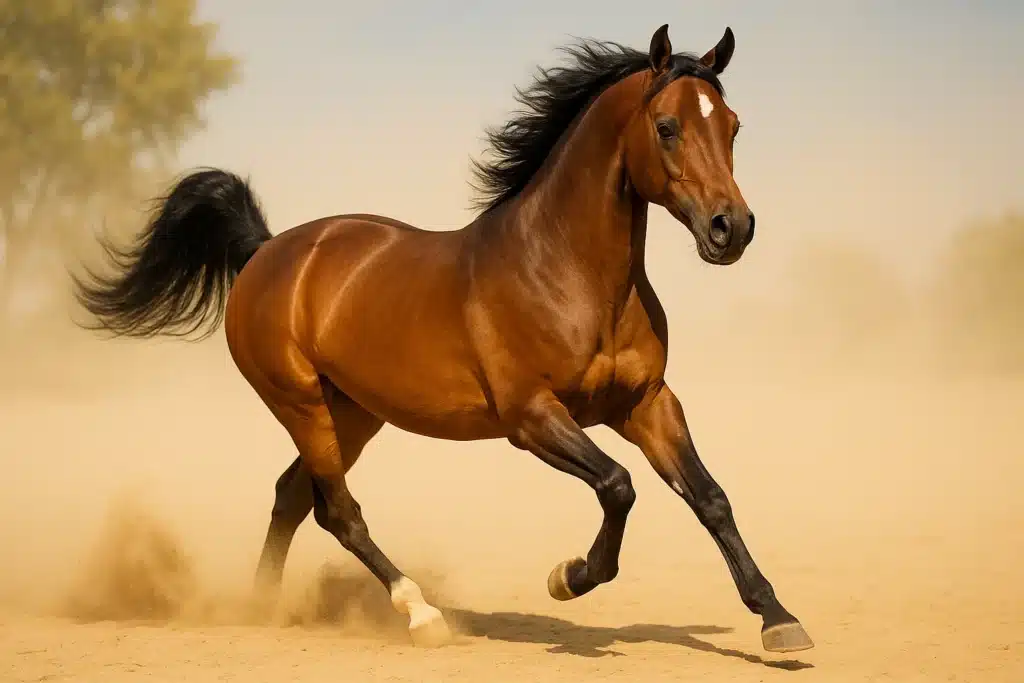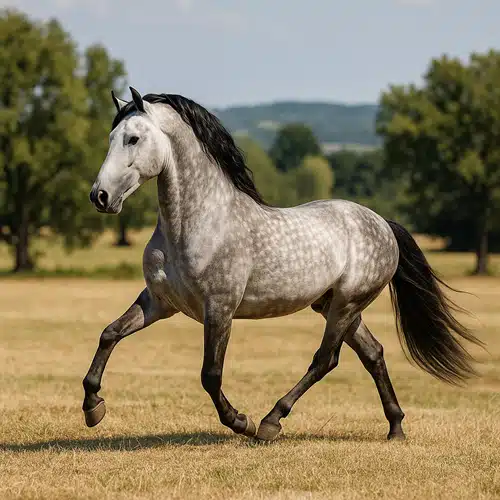
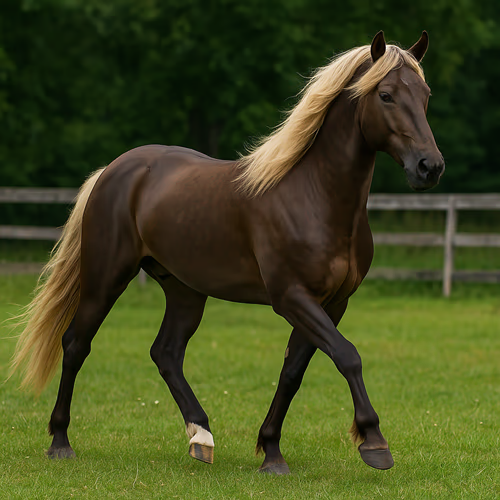
The Rocky Mountain Horse is a true gem of American breeding. Although its name points to mountainous origins, these horses have gained popularity across the United States and are now appreciated beyond America as well. It is a breed that combines remarkable gentleness, a striking appearance, and an exceptionally comfortable gait.
The Rocky Mountain Horse stands out above all for its temperament – calm, patient, and friendly toward humans. Because of this, it is an ideal choice for families, older riders, beginners, and anyone who dreams of a safe and relaxing riding experience. An additional advantage is its four-beat gait known as the “single-foot,” which makes riding smooth and comfortable even for many hours.
This horse is an excellent partner for leisure riding, equestrian tourism, and natural trail riding, but it also performs well in shows and liberty work. The Rocky Mountain Horse is a breed that captivates not only with its appearance but above all with its gentle nature and willingness to cooperate with humans.
Table of Contents
Origin and History
Although the name might suggest otherwise, the Rocky Mountain Horse does not originate from the Rocky Mountains. Its true homeland is the Appalachians, specifically the state of Kentucky, where rugged terrain, changing weather conditions, and the needs of local people shaped this unique breed.
The foundation sire of the breed is considered to be a stallion named Old Tobe, who lived in the 1940s. He was an exceptional horse—known for his gentle temperament, great endurance, and above all his natural four-beat gait called the “single-foot,” which provided riders with comfort over long distances. Old Tobe served his owner for many years and later became the cornerstone of local breeding, passing his best traits on to future generations.
Zapoznaj się z artykułami:
- Poznaj więcej ras koni. Zapoznaj się dokładnie z ich charakterem, cechami.
- Poznaj konia Paso Fino – rasę słynącą z aksamitnie miękkiego chodu i niezwykłej gracji.
- Poznaj konia Tennessee Walking Horse i odkryj jego niezwykły chód, który pokocha każdy jeździec.
- Dowiedz się, co sprawia, że koń Saddlebred króluje na pokazach i paradach na całym świecie.
Since then, Rocky Mountain Horses have been carefully selected by breeders in the Appalachian region. They were meant to be versatile—suitable both as working horses on farms and as loyal companions for families. Breeders valued their endurance in difficult, mountainous terrain, as well as their calm temperament, which made them suitable for riders of all ages.
Over the following decades, the breed gained great popularity in Kentucky and later throughout the United States. Today, the Rocky Mountain Horse is valued not only for its working heritage but also for its unique appearance, smooth gait, and the remarkable bond it can form with humans.

Appearance and Distinctive Features
The Rocky Mountain Horse is a breed that combines harmony, grace, and strength. It is not overly massive, yet its build reflects energy and endurance. This makes it perfectly suited for both recreational trail riding and everyday use.
Conformation and Proportions
Height at the withers: typically between 145 and 160 cm, making this breed suitable for both adults and younger riders.
Head: well-defined, with a straight profile, often featuring a broad forehead that gives the horse a noble and friendly appearance.
Eyes: large and gentle, immediately revealing the calm nature of the Rocky Mountain Horse. Their expression is often described as “trusting.”
Neck: long, elegant, straight or slightly arched, blending smoothly into a well-built body.
Back: short and strong, providing stability and comfort in the saddle.
Croup: well-rounded and muscular, giving the horse elasticity and power in movement.
Limbs: clean, straight, and strong, ending in hard hooves that perform exceptionally well in mountainous and rocky terrain.
Coat Color
The most characteristic feature of the Rocky Mountain Horse is its chocolate coat with a light mane and tail (known as “silver dapple”). This contrast gives the breed a particularly striking and elegant appearance. In addition, bay, chestnut, black, palomino, and gray coats can also be found. Each variation highlights the breed’s natural beauty, but it is the silvery sheen on a dark coat that has made the Rocky Mountain Horse a true icon among gaited horses.
Overall Impression
The Rocky Mountain Horse has a calm, friendly expression, and its conformation reflects both strength and softness. It appears elegant yet solid, which perfectly represents its versatility—it is at once a family horse, a working horse, and a show horse.
Temperament and Behavior
The Rocky Mountain Horse is considered one of the gentlest and most friendly riding horses in the world. It is a horse that truly enjoys human interaction—it not only accepts human presence but actively seeks it. In its relationship with its handler, it behaves like a loyal companion: calm, patient, and always willing to cooperate.
Key mental traits of the Rocky Mountain Horse:
Low reactivity – horses of this breed rarely spook; they are balanced and predictable. Even in new situations, they tend to remain calm.
Patient and resilient – they can work for long periods without signs of nervousness or frustration, making them ideal partners for leisure riding and equestrian tourism.
Intelligent and easy to train – they learn quickly, remember new cues well, and are eager to work with the rider.
Seeks closeness – Rocky Mountain Horses often display strong attachment to humans. They may rest their head on their handler or “cuddle,” which helps build a deep bond.
A Horse for Everyone
Thanks to its exceptional temperament, the Rocky Mountain Horse is widely regarded as a true family horse. It performs прекрасно with children, older riders, and people with disabilities. Its patience and gentleness make it an extremely safe and trustworthy partner.
That is why in the United States it is often said that the Rocky Mountain Horse not only carries its rider but also gives them a sense of calm and trust. In the saddle, it allows for relaxation, and in everyday work, it brings joy through its gentle and affectionate nature.
Uses of the Rocky Mountain Horse
Although Rocky Mountain Horses were originally bred as working mounts in the Appalachians, today their role extends far beyond farm work. Thanks to their exceptional temperament and comfortable gait, they are widely used in recreation, therapy, and shows.
Trail Riding and Recreation
This is the primary use of Rocky Mountain Horses. Their four-beat “single-foot” gait makes riding बेहद comfortable, even during long hours in the saddle. These horses are sure-footed and handle steep trails, mountainous terrain, and rocky paths with ease. For this reason, they are often used in the United States as trail horses, perfect for long-distance riding and equestrian tourism.
Therapy and Natural Horsemanship
The gentle temperament of the Rocky Mountain Horse makes it an excellent partner for equine-assisted therapy. They are calm, patient, and predictable, which makes them ideal for working with children, older adults, and people with disabilities. Additionally, their character allows them to excel in natural horsemanship and liberty work—they respond quickly to body language, gestures, and human emotions. These are horses that build relationships based on trust and closeness.
Shows and Parades
The unique silver dapple coat—characterized by a chocolate-colored body with a light mane and tail—makes the Rocky Mountain Horse a standout in parades and equestrian shows. Their smooth gait and striking appearance attract attention, especially in the United States, where the breed is considered highly prestigious.
A Family Horse and Everyday Companion
It is also worth emphasizing that Rocky Mountain Horses are not only used for recreation and shows but are also chosen as family horses. Their gentleness and patience make them suitable for both experienced riders and those just beginning their journey with horses.
Movement and Unique Gait
The most distinctive feature of the Rocky Mountain Horse is its natural four-beat gait, known as the “single-foot” or ambling gait. This is what makes riding exceptionally comfortable and accessible to almost everyone—from children to older riders and even those with health issues.
Unlike the traditional trot, the Rocky Mountain’s gait is smooth and lacks a suspension phase, which means the rider does not experience the typical bouncing motion. Sitting on this horse feels as if it is gliding over the ground, with every step soft and harmonious.
Key characteristics of the Rocky Mountain’s unique gait:
No bouncing for the rider – ideal for people with back problems, joint issues, or other physical limitations.
Rhythmic and smooth – the movement is even, precise, and comfortable, even during long rides.
Exceptional endurance – the single-foot allows the horse to maintain a speed between a walk and a canter for hours, making it perfect for long-distance riding.
Natural ability – this gait is inborn, not taught. The Rocky Mountain Horse is born with this ability and does not require complex training to perform it well.
As a result, the Rocky Mountain Horse does not perform a traditional trot. Its four-beat gait fully replaces this phase of movement, making the ride smoother and more rider-friendly.
Why is the Rocky Mountain gait so highly valued?
The single-foot allows riders to cover even difficult terrain in complete comfort—without fatigue for the rider and without excessive strain on the horse. This is why the Rocky Mountain Horse has earned the reputation of a “family horse” and a “back-friendly horse.” In the United States, it is often said that riding one feels as comfortable as sitting in a rocking chair.
Rocky Mountain Horse Compared to Other Breeds
Although Rocky Mountain Horses are still relatively unknown in Europe, they enjoy great recognition in the United States. This breed stands out not only for its gentle temperament but above all for its unique “single-foot” gait. It is worth comparing it with other horses that have similar uses or special gaits.
Rocky Mountain vs. Paso Fino
The Paso Fino is known for its spectacular, rhythmic paso gait, admired for its elegance and expression.
The Rocky Mountain Horse focuses on comfort—its single-foot is simpler and less showy, but extremely smooth and natural.
Paso Fino horses tend to be more energetic and expressive, while Rocky Mountain Horses are calmer and gentler.
Rocky Mountain vs. Tennessee Walking Horse
The Tennessee Walking Horse performs the running walk—a fast, smooth gait with a similar level of comfort.
The Rocky Mountain Horse is smaller and more family-oriented, often easier to handle in everyday use.
Tennessee Walkers are more commonly seen in large shows, while Rocky Mountain Horses are more often used for recreation and trail riding.
Rocky Mountain vs. American Saddlebred
The American Saddlebred is known for its flashy movement, high leg action, and elegant presence.
The Rocky Mountain Horse has less visually dramatic movement but is far more comfortable for the rider.
The Saddlebred is primarily a show horse, while the Rocky Mountain Horse is a versatile family and utility horse.
Rocky Mountain vs. Icelandic Horse
The Icelandic horse is known for the tölt—a four-beat, smooth gait often compared to the single-foot.
The Rocky Mountain Horse is larger, more visually refined, and more commonly used for family recreation.
Icelandic horses are famous for their endurance in harsh climates, while Rocky Mountain Horses are valued for their gentle and friendly nature.
Rocky Mountain vs. Arabian Horse
The Arabian horse is more spirited, energetic, and typically requires an experienced rider.
The Rocky Mountain Horse is calmer, less reactive, and much easier to handle.
The Arabian is a sport and endurance horse, while the Rocky Mountain Horse is primarily a family and leisure riding companion.
Breeding and Registration
Rocky Mountain Horses are a relatively young breed, which is why their breeding and registration have been well organized from the very beginning. A key role was played by the establishment of the Rocky Mountain Horse Association in 1986—an organization that continues to maintain studbooks, promote the breed, and preserve its distinctive characteristics.
Registration Requirements
To be registered with the RMHA, a horse must meet specific criteria:
Natural gait – the horse must demonstrate an innate four-beat “single-foot” gait, which is the hallmark of the breed.
Calm temperament – the horse must not be overly aggressive or nervous; the Rocky Mountain Horse is defined by gentleness and predictability.
Correct conformation – the horse should match the breed standard, including medium height, a strong and compact build, and an elegant appearance.
Genetic and Health Testing
Registration with the RMHA also involves health and genetic screening.
Horses are tested for the presence of the silver dapple gene (responsible for the characteristic chocolate coat with a light mane and tail).
Mandatory genetic testing includes screening for hereditary conditions such as Multiple Congenital Ocular Anomalies—an eye disorder sometimes linked to the silver coloration. This ensures that Rocky Mountain breeding is carried out responsibly, with a strong emphasis on the health of the horses.
Breeding Standards
Breeders focus on preserving the traits that have defined the breed from the beginning:
– a gentle, family-friendly temperament,
– endurance in challenging terrain,
– an elegant appearance,
– the unique, natural “single-foot” gait.
Thanks to these standards, the Rocky Mountain Horse remains a highly consistent and predictable breed—these horses are almost always exactly what one would expect from a “family leisure horse.”
Rocky Mountain Horses in Poland and Europe
Although Rocky Mountain Horses are among the most recognizable breeds in the United States, their presence in Europe is still relatively limited.
Poland
In Poland, horses of this breed are a true rarity. Individual horses can be found in private recreational stables, where they serve as family horses and trail riding companions. However, there are no large registered breeding programs, and the lack of wider promotion means the breed remains in the shadow of more popular horses, such as Arabian horse, Hucul horse, or various cold-blooded breeds.
Western Europe
Rocky Mountain Horses are more popular in countries such as Germany, Netherlands, and the United Kingdom. It is in these regions that the first small breeding programs have emerged, importing horses directly from the United States. This has allowed for the introduction of horses with full pedigrees that meet the standards of the Rocky Mountain Horse Association.
In these countries, Rocky Mountain Horses are especially valued by:
– enthusiasts of recreational riding and equestrian tourism,
– centers specializing in natural horsemanship and liberty work,
– riders seeking safe, calm, and beginner-friendly horses.
Growth Potential
Interest in gaited horses—those with special gaits—is steadily increasing in Europe. Breeds such as the Paso Fino and the Tennessee Walking Horse have already found their enthusiasts, and Rocky Mountain Horses are increasingly appearing on the list of breeds that could gain recognition beyond the United States.
Their riding comfort, unique appearance, and gentle temperament make them an excellent alternative to traditional European breeds.
It is likely that in the coming years, Rocky Mountain Horses will begin to appear more frequently in Poland—especially in stables focused on trail riding, family recreation, and natural horsemanship.
Interesting Facts About the Rocky Mountain Horse
Rocky Mountain Horses, although originating from local breeding in the Appalachians, quickly gained recognition thanks to their unique appearance and gentle character. There are many interesting facts about this breed that highlight just how special it is.
Stars of films and commercials – their striking chocolate coat with a light mane and tail makes Rocky Mountain Horses popular in films and advertisements. Their elegant look and unique coloring stand out on camera.
Old Tobe – a remarkable foundation sire – the legendary stallion Old Tobe, from whom most modern horses of this breed descend, lived to the age of 37. He was used for breeding until the end of his life, making him one of the most influential and long-lived stallions in breeding history.
A coat with a metallic sheen – in sunlight, the chocolate coat of this breed often shimmers with silver and golden reflections. This effect is especially visible in horses carrying the silver dapple gene, further enhancing their unique appearance.
The “quiet horse” – unlike many other breeds, Rocky Mountain Horses are known for being quiet. They rarely neigh, and their voice is calm and soft. In daily interaction, they give the impression of being composed horses that do not need loud signals to communicate with humans or the herd.
A true family horse – in the United States, it is often said that the Rocky Mountain Horse is a horse “for the whole family.” Thanks to its gentle nature and exceptional patience, it is chosen both by adult riders and for children beginning their journey with horseback riding.
Care and Health
Rocky Mountain Horses are a breed known for their resilience and longevity. With proper care, they typically live between 25 and 30 years, and some individuals even reach an advanced age. However, their health and condition are closely dependent on appropriate management and living conditions.
Exercise and Work
Rocky Mountain Horses are made for movement. Although they have a calm temperament, they do not cope well with monotony or lack of activity. They require regular, light work to maintain both mental and physical balance. Trail riding, hand walking, or liberty work are excellent forms of activity for this breed.
Preventive Health Care
The main health challenge for this breed is a tendency toward eye problems, especially in horses with the silver coat color. The condition Multiple Congenital Ocular Anomalies can cause vision defects, which is why horses with this coloration should undergo regular veterinary eye examinations.
Aside from this, Rocky Mountain Horses are generally healthy and hardy, provided standard preventive care is followed, including vaccinations, deworming, and proper hoof care.
Nutrition and Diet
Rocky Mountain Horses tend to gain weight easily, so they require a well-balanced diet. High-quality hay and pasture grass should form the basis of their nutrition, supplemented with appropriate minerals. Excessive concentrate feed should be avoided, as it can lead to obesity and metabolic issues.
Coat Care
One of the breed’s greatest assets is its striking coat, especially in horses with the chocolate color and light mane and tail. To maintain its natural shine, regular grooming and brushing are essential. A well-balanced diet also contributes significantly to coat quality and overall skin health.
FAQ
Is the Rocky Mountain Horse suitable for beginners?
Yes – it is one of the safest breeds for beginners and riders with disabilities.
Does the Rocky Mountain Horse trot?
No – instead of a trot, it has a natural four-beat gait that is more comfortable for the rider.
Can you buy a Rocky Mountain Horse in Poland?
Very rarely. Most horses are imported from Germany, the United States, or the Netherlands.
Are Rocky Mountain Horses suitable for sport?
They do not compete in traditional Olympic disciplines, but they excel in gaited shows and trail riding.
Are they hypoallergenic?
There is no evidence that they are hypoallergenic, but they tend to have a less intense odor than some other breeds.
The Rocky Mountain Horse is the perfect choice for anyone seeking harmony, comfort, and a true equine partner. Its smooth gait, calm nature, and striking coat make it an ideal horse for recreation, therapy, and partnership-based riding. It is a horse that wins hearts—step by step.