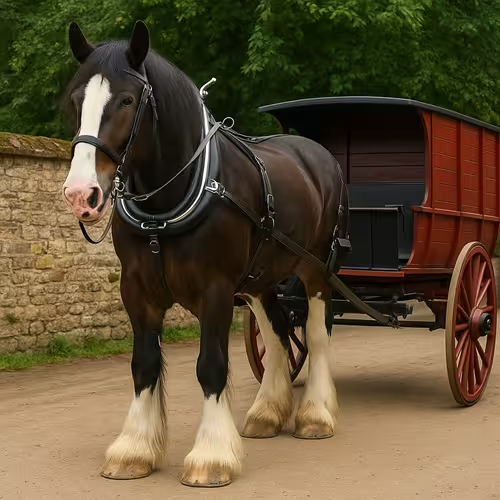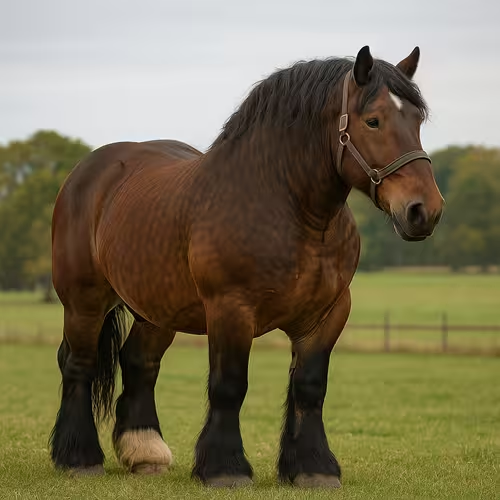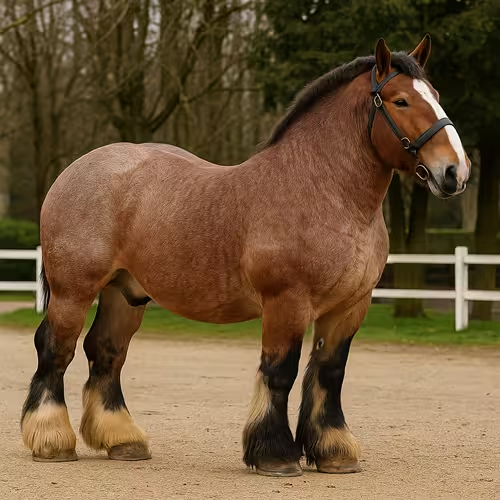
The Shire horse is a true giant in the world of horses. Recognized as the largest horse breed in the world, it can reach over 200 cm at the withers and weigh more than a ton. Despite its impressive size, the Shire is known for its exceptionally gentle and friendly temperament, which has earned it the nickname “gentle giant.”
It originates from Great Britain, where for centuries it served as a working horse—pulling heavy wagons, plows, and beer barrels in London breweries. Its strength was indispensable in times before agricultural and transport machinery existed.
Today, the Shire is a horse that inspires admiration worldwide—both as a carriage horse and a show horse. It appears in parades, historical reenactments, and folk events, and its majestic build and calm temperament make it one of the most recognizable draft horse breeds.
Table of Contents
Origin and History of the Shire Horse
The Shire horse is one of the most recognizable draft horse breeds, with a history closely tied to Great Britain. It originates from the central regions of England, where as early as the Middle Ages a population of so-called “Great Horses” was developed. These were powerful animals capable of carrying heavily armored knights and taking part in battles that determined the fate of entire kingdoms.
During the Tudor period, intentional crossbreeding began between local horses and imported Flemish draft horses. The goal was to create a breed that was exceptionally strong, durable, and calm—capable not only of carrying heavy armor but also of working in agriculture. This gradually shaped the type we now know as the Shire horse.
With the end of the age of knights, Shire horses found new roles. From the 17th century onward, they became the backbone of British transport and agriculture. Plowing fields, hauling goods, and pulling heavy wagons became everyday tasks for these giants.
They reached the height of their popularity in the 19th century during the Industrial Revolution. Shire horses were used to pull heavy wagons loaded with beer barrels through the streets of London, and their strength was essential in breweries, mines, and urban construction. Thanks to their power and calm temperament, they were considered indispensable in transport before the arrival of steam and combustion engines.
In the 20th century, the population of Shire horses declined rapidly as mechanization replaced horses in work. However, thanks to dedicated breeders and enthusiasts, the breed was saved from extinction. Today, the Shire is a symbol of British tradition and breeding heritage. It is mainly seen in show harness, parades, and historical reenactments, where it impresses with its majesty and calm nature.

Appearance and Characteristics
The Shire horse is a true giant in the world of horses—the largest breed ever developed by humans. Adult stallions reach 180–200 cm at the withers, and some record individuals have exceeded 210 cm. Their weight often surpasses 1,000–1,200 kg, making the Shire one of the heaviest and most powerful draft horses in history. Mares are slightly smaller (170–180 cm) and lighter, but still impress with their size.
Conformation and Build
- Body – very muscular, yet well-proportioned and harmonious. The Shire is not only “heavy” but also elegant in movement.
- Limbs – long and strong, ending in wide hooves. The lower legs feature characteristic abundant feathering, which gives them a striking appearance.
- Chest – deep and broad, providing great lung capacity and pulling power.
- Hindquarters – strong, wide, and slightly rounded, serving as the main source of power in draft work.
- Neck – long, powerful, well-muscled, and set high.
- Head – large, with a straight profile and a gentle expression. Despite its monumental size, the Shire appears calm and balanced.
Coat Colors and External Appearance
The most common coat colors of the Shire horse are:
- black
- bay
- grey
White markings on the legs and head are also characteristic and widely accepted in breeding, often enhancing the breed’s impressive appearance. A long, thick mane and tail further emphasize its majestic look.
Overall Appearance
The Shire impresses with its size, strength, and elegance. Although it is a draft horse, it moves smoothly and harmoniously. Combined with its distinctive feathering, this makes it one of the most striking carriage horses in the world.
Character and Temperament
Despite its monumental size, the Shire horse is considered one of the most gentle and friendly horse breeds in the world. It is often called a “gentle giant” because it combines immense physical strength with an exceptionally calm and balanced temperament.
Key Temperament Traits
- Calmness and composure – the Shire rarely reacts impulsively. It is resistant to stress and does not spook easily, even in noisy environments.
- Gentleness toward people – horses of this breed are known for their friendly attitude toward humans. They quickly form bonds and enjoy physical contact—often initiating closeness themselves.
- Patience – the Shire can work for long periods in a steady rhythm and calmly tolerate the presence of beginner riders.
- Obedience and intelligence – it is willing to cooperate, learns quickly, and is easy to train.
- Emotional stability – even in unusual or loud situations (parades, reenactments, large events), it remains balanced and predictable.
The Shire in Human Interaction
Thanks to their exceptional temperament, Shire horses are used not only in harness work and historical reenactments but also in work with children and beginner riders. Their calm nature builds trust, and their large size—rather than intimidating—often creates a positive impression and fascination.
Overall Character
The Shire horse is a perfect example of a breed where physical power goes hand in hand with gentleness and patience. It is not only majestic in appearance but also extremely friendly and obedient, making it suitable for work, recreation, and shows alike.
Worth reading:
- Poznaj więcej ras koni. Zapoznaj się dokładnie z ich charakterem, cechami.
- Poznaj konia małopolskiego – piękno, wytrzymałość i polska duma.
- Odkryj konia huculskiego – górski skarb Karpat i wierny towarzysz
- Przeczytaj, jak konie śląskie łączą sobie siłę konia roboczego z gracją sportowca
- Jak dobrać ogłowie dla konia wielkopolskiego? – lekka komunikacja
- Koń ardeński – potężny i łagodny olbrzym z Europy
Uses of the Shire Horse
Although the days when Shire horses pulled beer wagons through the streets of London are long gone, the breed still plays an important role. Today, it is no longer a typical working horse but serves representative, recreational, and cultural functions. Thanks to its majestic appearance and gentle temperament, the Shire has many uses around the world.
Parades and Historical Events
The Shire is a frequent participant in historical reenactments and folk parades. Its enormous size and striking appearance perfectly match the atmosphere of medieval and Victorian celebrations.
Show Harness
Shire horses are a major attraction in show harness displays at fairs, exhibitions, and festivals. They are often presented in traditional harnesses that reflect the times when they were the backbone of British transport.
Recreational Riding
Due to their powerful build, Shire horses can be used for riding by heavier riders. They are not fast, but they provide a strong sense of stability and safety in the saddle.
Hippotherapy and Work with People
As exceptionally gentle and patient horses, Shires are used in hippotherapy and in working with children and people with disabilities. Their calm movement and predictability make them valuable therapeutic partners.
Agritourism and Education
In many agritourism farms, Shire horses serve as show animals—attracting visitors and acting as an educational element, helping people learn about the history and traditions of draft horse breeding.
Wedding Carriages and Film Industry
Due to their majestic presence, Shire horses are increasingly used in wedding carriages and film productions. Their impressive appearance adds a unique atmosphere to ceremonies and cinematic scenes.
Breeding and Conservation
Today, the Shire is also included in genetic conservation programs, as the breed was once at risk of extinction in the 20th century. Breeders focus on preserving its traditional traits—strength, majestic appearance, and gentle temperament.
Breeding and Care of the Shire Horse
Breeding Shire horses requires proper preparation, as these animals are exceptionally large. Their management differs from that of smaller draft breeds—especially in terms of space, infrastructure, and care.
Housing Conditions
- Stable – stalls for Shire horses should be significantly larger than standard ones, with a minimum area of 20–25 m², allowing the horse to move and rest comfortably. A higher ceiling and solid construction are also essential to withstand the size and strength of such powerful animals.
- Ventilation and bedding – good airflow protects against moisture, while a thick layer of straw provides comfort and safety for the limbs.
- Turnout areas – Shires require large paddocks for daily movement. Fencing must be particularly strong and durable to handle a horse of this size.
Feeding
- Forage-based diet – high-quality hay and pasture grass form the basis of the diet, and Shires consume significantly more than an average horse.
- Concentrates – should be fed carefully. This breed has a slower metabolism, and excessive amounts of oats or grains can lead to obesity.
- Supplements – due to the heavy strain on joints, supplements supporting the musculoskeletal system (e.g., glucosamine, MSM) are recommended.
- Water – an adult Shire horse may drink over 50 liters of water per day, so constant access to clean water is essential.
Grooming
- Legs and feathering – abundant feathering around the fetlocks requires regular cleaning to prevent inflammation and conditions such as mud fever.
- Hooves – due to their weight, frequent trimming and maintaining dry conditions are crucial to prevent hoof rot and other issues.
- Daily care – regular grooming and skin checks help detect abrasions or infections early, which can otherwise lead to complications in such large horses.
Health and Condition
Despite their size, Shire horses are not particularly prone to illness, but their joints and musculoskeletal system are constantly under heavy strain. Therefore, it is important to:
- ensure daily movement
- maintain a healthy body weight
- avoid overloading during work
- monitor orthopedic health, especially in older horses
The Shire horse is a demanding breed—it requires more space, feed, and care than the average horse. However, with proper management, it rewards its owners with longevity, strength, and an exceptional calmness that makes it truly unique among draft horses.
The Shire Horse in Poland
In Poland, Shire horses are still a true rarity. There are no large, specialized breeding farms dedicated to this breed, so most individuals are brought into the country through import. They are most commonly imported from Great Britain, Germany, and Belgium, where the breed is more popular and has a stronger breeding base.
Where You Can Find Shires in Poland
- in private stables and among enthusiasts who import them mainly for recreational and show purposes,
- at equestrian events, parades, and driving shows, where Shires attract great attention from the public,
- in agritourism farms and educational centers, where they are presented as “living monuments” of traditional horse breeding culture.
Growing Interest in the Breed
In recent years, interest in Shire horses in Poland has been steadily increasing. Draft horse enthusiasts are more frequently seeking out this breed, captivated by its majestic appearance and gentle temperament. The growing popularity of parades, historical reenactments, and equestrian events has also contributed to Shires appearing more often in public spaces.
Breeding and Crossbreeding
Due to the small number of purebred individuals, some breeders choose to cross Shires with Polish draft horses (such as Sztumski or Sokólski). The aim is to produce offspring with greater size, strength, and impressive appearance while maintaining a calm temperament.
Breed Status in Poland
Despite this growing interest, Shire horses remain a niche breed in Poland. They are not widely included in breeding programs, and their population is relatively small. On the other hand, this rarity makes each individual particularly special—capturing the admiration of both horse enthusiasts and those who are not involved in equestrianism on a daily basis.
Interesting Facts about Shire Horses
The tallest horse in the world – the record-holder “Sampson,” later renamed “Mammoth,” was a Shire stallion. Born in 1846, he reached an incredible height of 219 cm at the withers and weighed over 1,500 kg. To this day, he is considered the largest horse in history.
Horses of legends and folklore – due to their impressive size, Shire horses have appeared in many legends, fairy tales, and folk stories. They were often portrayed as knights’ mounts or companions of giants and heroes in English folklore.
Symbols of breweries – Shires are still associated with British breweries. These horses once pulled beer wagons through the streets of London, and their images continue to appear in advertisements and marketing campaigns of well-known beer brands.
Surprisingly agile – despite weighing over a ton, Shire horses are remarkably agile and fluid in movement. Their stride is rhythmic and balanced, and despite their massive build, they move with surprising lightness compared to other draft breeds.
Shire breed festivals – in Great Britain, festivals and exhibitions dedicated to this breed are regularly organized. Breeders showcase their horses in harness and competitions, and these events play an important role in promoting and preserving the breed.
The gentle giant – the Shire combines majesty, strength, and exceptional gentleness. It is an ideal horse for representation and shows, while also being loyal and friendly in everyday interaction with humans.
Although the breed is still relatively unknown in Poland, it is gaining more and more enthusiasts each year who appreciate its majestic appearance and calm temperament.
The Shire Horse Compared to Other Draft Breeds
Shire vs Percheron
The Percheron, originating from France, is considered an elegant draft horse that combines strength with lightness. The Shire is noticeably larger and heavier, but less refined in movement. The Percheron is better suited for show harness, while the Shire impresses mainly with its size and presence.
Shire vs Ardennes
The Ardennes horse is more compact, stocky, and lower in height, typically used for practical work. The Shire surpasses it in height, leg length, and overall majesty. Ardennes horses are mainly used for field and forestry work, whereas the Shire more often serves a representative and show role.
Shire vs Belgian Horse
Belgian draft horses (Brabant) are among the heaviest in the world and are often more muscular than Shires. However, the Shire is taller and more refined, with a more elegant outline. The Belgian is known as a strength champion, while the Shire holds the record for height.
Shire vs Clydesdale
The Clydesdale, like the Shire, comes from the British Isles and is known for its impressive feathering and strong build. Compared to it, the Shire is significantly larger and more monumental. The Clydesdale is more commonly seen in advertisements and parades, while the Shire is often featured in strength displays and breeding shows.
Shire vs Polish Draft Horses
Compared to Polish draft horses (such as Sztumski or Sokólski), the Shire is clearly taller and heavier. Native Polish breeds are better adapted to local agricultural conditions, while the Shire stands out mainly for its size and dignified appearance.
Health of the Shire Horse
Shire horses are considered relatively hardy and long-lived, although due to their size they require careful management. Their bodies cope well with various climatic conditions, but their musculoskeletal system and hooves are particularly prone to strain. With proper diet and preventive care, a Shire can live 20–25 years or even longer.
Most Common Health Issues
- Obesity – due to a slower metabolism, Shires tend to gain weight easily, which puts additional strain on joints and hooves.
- Orthopedic problems – their large body mass can lead to joint degeneration, lameness, and spinal issues.
- Hoof diseases – they are especially prone to conditions such as thrush and infections caused by moisture. With such weight, any hoof problem can quickly worsen.
- Skin conditions – abundant feathering can trap moisture and dirt, increasing the risk of mud fever and skin inflammation.
- Circulatory issues – lack of movement may lead to circulation problems, further affecting the musculoskeletal system.
Care and Prevention Recommendations
- Regular movement – despite their size, Shires need daily exercise to maintain fitness and healthy joints.
- Weight control – their diet should be based on hay and grass, with limited oats and concentrates. Regular monitoring helps prevent obesity.
- Routine hoof care – large hooves require frequent trimming and inspection to avoid infections and deformities.
- Feathering care – regular cleaning and drying of the leg hair help prevent fungal infections and skin inflammation.
- Veterinary care – preventive joint and spine checks, vaccinations, and deworming are essential for maintaining health.
Hardiness
The Shire horse adapts well to colder climates and usually does not require blanketing in winter, except for older or ill horses. In hot weather, however, access to shade and plenty of water is essential, as high temperatures can be more demanding for such a large breed.
With proper care and suitable conditions, the Shire can remain healthy for many years. Despite being the largest horse in the world, its calm temperament and endurance make it a rewarding and relatively manageable companion.
FAQ
Is the Shire horse the largest horse in the world?
Yes, it is officially the largest horse breed in terms of height and weight.
Can you ride a Shire horse?
Yes, of course. It is suitable for recreational riding, although the saddle must be specially fitted.
How much does a Shire horse cost?
Prices are high—typically ranging from $7,500 to $20,000, depending on pedigree.
Is this breed suitable for beginners?
Yes, thanks to its calm temperament, the Shire can be a good horse even for inexperienced riders.
Is the Shire horse suitable for carriage driving?
Definitely. It is one of its natural uses.