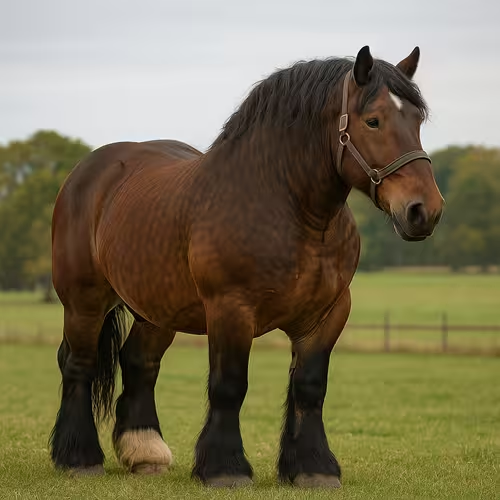
The Ardennes horse is one of the oldest and most well-known draft horse breeds in the world. It originates from the mountainous Ardennes region, which includes present-day Belgium, France, and Luxembourg. As early as ancient times, it was valued for its strength, endurance, and resilience, and its history dates back to the era of the Roman legions.
Ardennes horses were once war horses—their powerful builds carried knights in heavy armor during medieval battles. Over time, with the development of firearms, they found new uses in agriculture and transport. For centuries, they helped plow difficult, rocky fields, pulled heavy wagons, and worked in mines.
Today, the Ardennes horse is considered a symbol of strength and gentleness. Although its build is massive, its temperament remains exceptionally calm and friendly. Thanks to this, Ardennes horses are well-suited for recreational driving, shows, and agritourism, and in some regions of Europe they are still used for traditional work in forests and farms.
It is a breed that has proven its versatility over centuries—from the battlefield, through rural farms, to modern festivals and exhibitions. The Ardennes horse is a true gentle giant of Europe, whose power goes hand in hand with an exceptionally balanced character.
Table of Contents
Origin and History of the Ardennes Horse
The Ardennes horse is one of the oldest and best-documented draft horse breeds in Europe. Its history dates back to ancient times—horses from the Ardennes were already mentioned during the Roman era, where they served in legions as war mounts and transport horses. Their strength, endurance, and ability to withstand harsh terrain made them highly valued by Roman military commanders.
The Ardennes region, covering present-day Belgium, France, and Luxembourg, provided ideal conditions for the development of this breed. The mountainous, forested landscape required horses that were strong, resilient, and capable of hard work. It is no surprise that Ardennes horses quickly became an integral part of life in this region.
In the Middle Ages, Ardennes horses were used as war horses—their powerful legs and massive build allowed them to carry heavily armored warriors into battle. Over time, as firearms changed the nature of warfare, the breed found new roles in transport, agriculture, and draft work.
Worth reading:
- If you want to compare similar European draft strength, read about the Belgian horse – the mighty pride of Flanders.
- You can also explore the Shire horse, the largest horse in the world with an equally gentle temperament.
- For a more elegant type, discover the Friesian horse, known for its graceful movement and striking appearance.
- If you are interested in endurance and lighter builds, check out the Arabian horse, one of the oldest breeds in the world.
In the 19th century, breeders aimed to further strengthen the Ardennes horse. They were crossbred with Belgian horses and Percherons, resulting in increased size and strength while maintaining their gentle temperament. It was during this period that Ardennes horses began to be exported to other European countries, as well as to Russia and Scandinavia, where they proved highly effective in agricultural and forestry work.
During World War I and World War II, Ardennes horses played an important role as artillery and transport horses. Their ability to pull heavy guns and wagons in difficult terrain made them invaluable on European battlefields.
Today, the Ardennes horse is considered a symbol of European breeding tradition. It is still used in forestry, agriculture, and carriage work, but increasingly also serves in representative roles—taking part in parades, festivals, and shows. Despite the passage of centuries, the breed has retained its key traits: immense strength, reliability, and a calm, balanced temperament.

Appearance and Characteristics
The Ardennes horse is a true giant among draft breeds, with a physique that immediately commands respect. It is characterized by an exceptionally muscular, compact, and well-proportioned build, designed for heavy work in the field and in harness. This is a powerful yet harmonious horse, with strong bones and steady movement.
Conformation and Build
- Height at the withers: typically 155–162 cm, although some stallions can reach up to 170 cm.
- Body weight: usually between 800 and 1,000 kg, with some individuals exceeding one ton.
- Head: relatively large, with a straight profile, intelligent expression, and wide nostrils.
- Neck: short, strong, and well-muscled, set on a broad, deep chest.
- Chest and body: very wide, with well-developed musculature, providing great pulling power.
- Back and hindquarters: short, strong back and a wide, rounded croup, which is the main source of strength for pulling heavy loads.
- Limbs: short, thick, with exceptionally strong bone structure, ending in wide hooves; abundant feathering is often present around the fetlocks.
Movement
Despite their massive size, Ardennes horses move with energy and confidence. Their stride is relatively short but very powerful, making them excellent working horses. They demonstrate stability and balance in work while maintaining smoothness of movement, which also makes them impressive in parade harness.
Coat Colors
The most common coat colors of the Ardennes horse are:
- bay
- black
- chestnut
- roan
Grey and piebald horses occur less frequently but are also accepted in breeding. Their distinctive coloring, combined with their massive build, makes the Ardennes one of the most recognizable draft breeds in Europe.
Overall Appearance
The Ardennes is a horse of monumental build, impressing with its strength and musculature, yet moving surprisingly lightly for its size. Its physique perfectly reflects the role it has played for centuries—a horse created for hard work, but also well-suited for representation and shows.
Character and Temperament
The Ardennes horse has long been regarded as the embodiment of calmness and patience. Despite its powerful build, it stands out for its exceptionally gentle nature and strong trust in humans. This is why it is often called a “gentle giant.”
Key Temperament Traits
- Calmness and composure – Ardennes horses do not react impulsively; they are resistant to noise and sudden stimuli. This makes them reliable even in challenging conditions.
- Patience – they excel in work that requires long-lasting effort, but also in interactions with beginner riders.
- Trust in humans – they quickly form bonds with their handlers and are neither confrontational nor easily spooked.
- Ease of learning – although they are draft horses, they are intelligent and relatively quick to learn new tasks.
- Emotional stability – they remain balanced in stressful situations, making them one of the most predictable horse breeds in terms of behavior.
The Ardennes as a Horse for Working with People
Thanks to their temperament, Ardennes horses are excellent for therapeutic and recreational work. Their calm nature and predictability make them ideal for:
- children
- beginner riders
- elderly people
- people with disabilities
In work, they show a strong willingness to cooperate and a deep understanding of humans. They are neither stubborn nor aggressive, which makes working with them feel safe and reassuring.
Overall Character
Ardennes horses combine the strength of a giant with the gentleness of a companion. They are reliable at work, patient in training, and exceptionally friendly toward people. It is their stable and balanced temperament that has earned them great respect among breeders and users around the world for centuries.
Uses of the Ardennes Horse
The Ardennes horse has been closely connected with humans for centuries. Initially, it served as a war and draft horse, capable of carrying heavily armored knights and pulling supply wagons. Over time, with the development of agriculture and transport, the Ardennes became one of the most important working horses in Europe.
Today, its role is much broader and includes many different areas:
Recreation and Riding
Thanks to their massive build and calm temperament, Ardennes horses are well-suited for recreational riding, especially for heavier or less experienced riders. Although they are not fast, they provide a strong sense of stability and safety in the saddle.
Hippotherapy and Work with People with Disabilities
Due to their gentle nature, Ardennes horses are widely used in hippotherapy. Their wide backs, steady walk, and patience make them excellent partners for working with children, elderly individuals, and people with disabilities.
Shows, Festivals, and Historical Parades
The powerful appearance of the Ardennes makes it a popular choice for historical reenactments, knight shows, and regional parades. They are also a highlight of festivals and folk events, where they are often presented in traditional harness.
Forestry and Agriculture
In many countries, Ardennes horses are still used for logging in hard-to-reach forest areas. In agriculture, they are used on eco-friendly farms, where machinery cannot always replace horses in fieldwork.
Preservation of Regional Traditions
The Ardennes horse is a symbol of many European regions—especially Belgium and France—where its breeding holds cultural and historical significance. To this day, exhibitions and driving competitions are organized to preserve the traditions associated with this breed.
Other Uses
In some countries, particularly in France and Belgium, Ardennes horses are also used for meat production. However, this practice is controversial and criticized by many horse enthusiasts.
The Ardennes has come a long way—from war and farm work to becoming a partner in recreation, therapy, and culture. Today, it combines practical use with a representative role, and its presence continues to reflect the long history of cooperation between humans and horses.
Breeding and Care Requirements
Despite its massive build, the Ardennes horse is a hardy and relatively easy-to-keep breed. Its strength and endurance allow it to perform well both in work and recreation. However, like all draft breeds, it requires proper care tailored to its size and specific needs.
Housing Conditions
- Spacious stable – due to their size, Ardennes horses require large stalls (at least 16–20 m²) to move and rest comfortably. A high, well-ventilated stable helps prevent moisture and respiratory issues.
- Thick bedding – as heavy horses, they need well-cushioned flooring. Generous amounts of straw or shavings protect against pressure sores and strain on the legs.
- Daily movement – although they are working horses, they should not be kept inactive. Regular turnout in a paddock or pasture helps maintain healthy joints and overall condition.
Feeding
- Forage-based diet – high-quality hay and pasture grass should form the foundation of the Ardennes diet.
- Controlled concentrate intake – due to their large body mass and tendency toward laminitis, Ardennes horses should not be overfed with oats or other grains.
- Fiber and minerals – a fiber-rich diet supports digestion, while supplementation with calcium and magnesium helps maintain healthy bones and muscles.
- Constant access to water – because of their size, Ardennes horses require significantly more water than lighter breeds.
Grooming and Care
- Hoof care and farrier visits – with such a heavy body weight, regular hoof care is essential. Neglect can quickly lead to serious lameness.
- Veterinary prevention – vaccinations, deworming, and regular check-ups help keep horses in good condition for many years.
- Coat and leg care – Ardennes horses often have abundant feathering on their lower legs, which requires regular cleaning to prevent skin infections.
Climate Adaptability
The Ardennes horse adapts very well to the Polish climate. Its thick coat provides protection against cold, and its robust build allows it to withstand even harsh winters. Blanketing is only necessary in extreme conditions or for older or unwell horses.
Ardennes horses are resilient and not overly demanding, but their care requires adequate space, regular movement, and a properly balanced diet. With the right management, they reward their owners with longevity, good health, and reliability in work.
The Ardennes Horse in Poland
Although the Ardennes horse is not a native Polish breed, it has found its place in Poland and occupies a clear niche in practical use. It was introduced mainly in the 19th and 20th centuries from Belgium and France, where its breeding is most developed. Thanks to its powerful build and calm temperament, it quickly gained recognition among Polish breeders and users of draft horses.
Uses in Poland
- Forestry work – Ardennes horses are valued in forestry, especially for logging in areas where the use of heavy machinery is difficult or undesirable.
- Agritourism and recreation – their majestic appearance and gentle temperament make them a popular attraction in agritourism. They are also used in harness during holidays, harvest festivals, and regional events.
- Folk shows and parades – due to their impressive presence, Ardennes horses are often featured in parades and cultural or historical events.
- Breeding crossbreeding – in Poland, they are sometimes crossed with native draft breeds (such as Sztumski or Sokólski horses) to improve size and temperament while maintaining endurance and gentleness.
Breeding Centers
In Poland, Ardennes horses can be found in regions such as Podkarpacie, Lubelszczyzna, and Masuria, where both small private stables and larger breeding farms operate. Their population is still relatively small, but the breed enjoys steady interest among breeders and draft horse enthusiasts.
Conservation and Preservation Programs
The Ardennes breed is included in genetic diversity conservation programs, which help maintain its breeding purity and protect it from decline. In Poland, these efforts are carried out in cooperation with breeding organizations and institutions focused on preserving livestock breeds.
Although the Ardennes horse is not a native Polish breed, it has established an important role in the country. Its strength, resilience, and friendly nature make it valued both in practical work and in recreation and folk culture. In this way, alongside native draft horses, the Ardennes has become part of the landscape of Polish horse breeding.
Interesting Facts about Ardennes Horses
A symbol of strength and tradition – Ardennes horses have long been seen as a representation of strength, endurance, and loyalty to humans. They combine the traditions of European breeding with modern uses in recreation and culture. Although their population in Poland is still relatively small, more and more people are discovering their qualities and appreciating them not only as working horses but also as companions in everyday life.
Napoleon’s horses – Ardennes horses played an important role in military history. It was these powerful horses that Napoleon relied on for transport and artillery during his Russian campaign. Their strength allowed them to pull heavy cannons through difficult terrain and harsh climatic conditions.
Ancient roots – some Ardennes bloodlines may date back over 2,000 years, making this breed one of the oldest documented in Europe.
Parades in France and Belgium – to this day, annual Ardennes horse parades are held in the Ardennes region and surrounding areas, featuring hundreds of harness teams. These are folkloric and cultural events that attract horse enthusiasts from across Europe.
Ceremonial and wedding carriage horses – thanks to their majestic appearance, Ardennes horses are often used for special occasions such as weddings or Christmas parades. The sight of a pair of grey Ardennes horses in richly decorated harness is truly impressive.
Horses for children in Scandinavia – in Scandinavian countries, Ardennes horses are considered among the gentlest draft breeds. They are widely used in work with children and in hippotherapy, where their patience and stable temperament are invaluable.
The Ardennes Horse Compared to Other Draft Breeds
Ardennes vs Percheron
Both breeds originate from France, but they differ in build. The Percheron is taller and more elegant, with a longer neck and a more refined head, which makes it more commonly used in parade harness. The Ardennes is more massive and compact, with shorter legs, making it better suited for heavy field and forestry work.
Ardennes vs Belgian
The Belgian horse (Brabant) is considered one of the strongest horse breeds in the world. It is usually heavier than the Ardennes, more muscular, with an even more powerful chest. The Ardennes is slightly lighter but more versatile and agile. While the Belgian excels in strength competitions, the Ardennes is more often chosen for recreation and carriage work.
Ardennes vs Shire
The Shire is the tallest draft horse breed—some individuals exceed 200 cm at the withers. They are larger and more slender than Ardennes horses, with characteristic feathering on their legs. The Shire impresses with its size and calmness, while the Ardennes is more compact and practical for everyday work.
Ardennes vs Clydesdale
The Clydesdale is known for its impressive feathering and elegant appearance, making it a popular show horse. The Ardennes, on the other hand, is more utilitarian—stocky, massive, and built for work in the field and forest. While the Clydesdale is often seen in parades and advertisements, the Ardennes remains a working and farm horse.
Ardennes vs Sokólski and Sztumski
Polish draft horses—Sokólski and Sztumski—are closely related to the Ardennes. They were developed in part through crossbreeding with Ardennes and Belgian horses. They are very similar in build, although usually slightly smaller. The main difference lies in their origin—the Ardennes is a French-Belgian breed, while Polish draft horses are native types adapted to local conditions.
Health of the Ardennes Horse
Ardennes horses are known for their resilience and longevity. With proper care, they can live 25–30 years, and their strong build allows them to handle both hard work and changing climatic conditions. However, they are not completely free from health issues—due to their large size, they require special attention to their musculoskeletal system and metabolism.
Most Common Health Issues
- Obesity – Ardennes horses are prone to gaining weight, especially when fed too much concentrate feed and given insufficient physical activity. Excess weight puts strain on the joints and can lead to serious orthopedic problems.
- Laminitis – one of the main threats for this breed, often caused by overfeeding or an improper diet. Careful nutritional control is essential.
- Joint problems – their heavy body weight places stress on the musculoskeletal system, which can lead to joint degeneration, especially in older horses or those lacking regular movement.
- Skin conditions around the fetlocks – abundant feathering can trap moisture and dirt, increasing the risk of skin infections such as mud fever.
Care and Prevention Recommendations
- Diet control – the diet should be based on forage (hay, grass), with limited oats and grains. It is important to adjust feed quantity to the horse’s activity level.
- Regular movement – even working horses should have daily turnout if not actively working, to prevent joint and circulatory problems.
- Hoof care – due to their weight, regular trimming and maintaining clean, dry stable conditions are essential.
- Feathering care – the hair around the fetlocks requires regular cleaning to prevent infections and inflammation.
- Regular veterinary care – vaccinations, deworming, and routine check-ups help detect health issues early.
Hardiness
The Ardennes horse adapts very well to colder climates and usually does not require blanketing except in extreme conditions. Its thick coat provides protection in winter, and its solid build makes it resistant to sudden temperature drops. In summer, however, access to shade and water is essential, as heat can be more challenging for such a heavy breed.
The Ardennes is a horse that, with proper diet and consistent care, rewards its owner with longevity, stable health, and a strong willingness to work.
FAQ
Is the Ardennes horse suitable for riding?
Yes, although it is not a typical riding horse, it works well for recreational riding.
What are the feeding requirements of the Ardennes horse?
A high amount of forage, limited grains, and avoiding overfeeding.
Are Ardennes horses good for children?
Yes, thanks to their gentle temperament, they are safe for children and beginner riders.
Is the Ardennes horse difficult to care for?
No, but you should pay special attention to the feathering around the fetlocks and to hoof care.
Can you buy an Ardennes horse in Poland?
Yes, but the number of breeders is limited, so it’s important to carefully look for reputable sources.