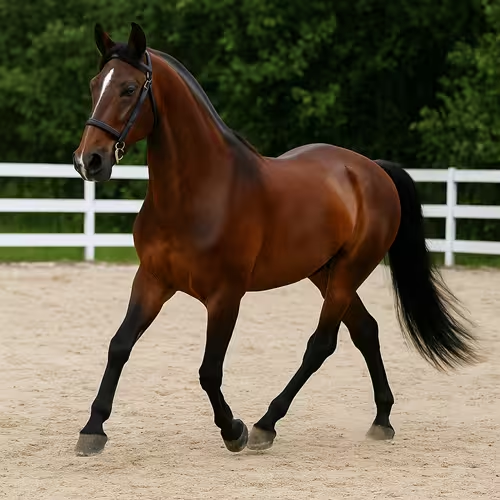
The Tennessee Walking Horse is one of the most recognizable and distinctive breeds developed in the United States. It is best known for its exceptionally smooth, comfortable, and natural gait—the “running walk”—which makes riding a true pleasure even during long hours on the trail.
This breed is also distinguished by its gentle temperament, friendly disposition, and elegant appearance. The Tennessee Walking Horse combines the strength and endurance of a working horse with the grace and harmony of a show horse.
Since its development in the 19th century, these horses have been favorites among American farmers, plantation owners, and long-distance riders. Today, they are valued both in recreational riding and in show rings, where their characteristic movement and presence make a strong impression.
It is a horse for anyone seeking a comfortable, elegant, and versatile mount—perfect for both trail riding and impressive performances.
Table of Contents
Origin and History
The Tennessee Walking Horse originated at the turn of the 18th and 19th centuries in the state of Tennessee in the United States. This region was known for its vast plantations and challenging terrain, where horses needed to be durable, comfortable to ride, and obedient. Breeders sought a mount that would allow for long hours in the saddle without tiring the rider, while also being calm and versatile.
The ancestors of the breed include:
- the Narragansett Pacer – one of the oldest American gaited breeds, known for its smooth gaits,
- the Canadian Pacer – a similar type, valued for endurance and speed,
- the Morgan horse – contributing strength and good temperament,
- the Thoroughbred – adding elegance and a more athletic appearance,
- other gaited breeds from the Caribbean and North America.
Worth reading:
- If you enjoy smooth riding, you should also discover the Paso Fino, a horse known for its silky gait and natural elegance.
- Another breed famous for stylish movement is the American Saddlebred, valued for its elegance and show presence.
- For a calm and comfortable riding experience, explore the Rocky Mountain Horse with its smooth gait and gentle temperament.
- If you are interested in speed rather than comfort, check out the Thoroughbred horse, one of the fastest breeds in the world.
Early breeding programs developed around Middle Tennessee, where local farmers and plantation owners quickly recognized the unique gait of these horses—the running walk—which provided exceptional comfort during work and travel.
In the 19th century, these horses gained great popularity throughout the southern United States. They were valued as working, traveling, and show horses.
In 1935, the Tennessee Walking Horse Breeders’ and Exhibitors’ Association was established—the official breed registry and breeders’ association. To this day, it maintains the studbook, oversees the breed’s development, and promotes Tennessee Walking Horses worldwide.
Today, the breed is recognized as a symbol of the state of Tennessee, and its distinctive style of movement has made it an ambassador of American equestrian tradition.

Appearance and Conformation
The Tennessee Walking Horse stands out with an elegant yet functional build, designed for comfortable riding and impressive presentation in shows. It is a medium to large horse, typically standing between 150 and 170 cm at the withers.
Characteristic conformation features:
Head – well-proportioned, with a straight profile, often showing refinement inherited from the Thoroughbred. The eyes are large, expressive, and intelligent, while the ears are medium-length, alert, and mobile.
Neck – long, well-set, and slightly arched, giving the horse an elegant and proud appearance.
Withers – well-defined but not overly high, allowing for comfortable saddling.
Back – medium-length, strong, and elastic, providing stability during riding.
Croup – muscular and rounded, with well-developed hindquarters that act as the “engine” of the horse’s movement.
Limbs – long, clean, and well-angled, with strong joints. The hooves are hard and durable, enabling movement across varied terrain.
Coat Colors
All coat colors are accepted, making the breed visually diverse and appealing. The most common include:
- bay (from light to dark),
- black,
- gray,
- chestnut,
- palomino,
- less commonly buckskin, pinto, and cremello.
The Tennessee Walking Horse presents itself with great harmony and dignity, and its appearance is further enhanced by its distinctive gaits, which set it apart from most other breeds.
Temperament and Character
The Tennessee Walking Horse is highly valued for its gentle and friendly temperament. From the very beginning, the breed was selected not only for its smooth movement but also for a stable mindset and ease of cooperation with humans.
Key personality traits:
- Gentle and patient – they are not prone to sudden reactions, making them safe horses for beginners.
- Sociable – they quickly bond with their handler, enjoy human interaction, and get along well with other horses.
- Intelligent and willing to learn – they easily absorb new tasks and respond quickly to rider aids.
- Emotionally balanced – they are not overly spooky and remain calm and predictable even in stressful situations.
- Ambitious but not nervous – they are capable of working intensively without the excessive excitability typical of some hot-blooded breeds.
Practical Use of Their Temperament
- Family horses – their patience and gentleness make them ideal for the whole family, including children.
- Equine-assisted therapy – their calm nature and smooth gait make them excellent therapy horses.
- Show and recreational horses – they enjoy attention and perform well in shows and parades.
Why are they so special?
The Tennessee Walking Horse has earned the nickname “America’s most user-friendly horse.” Unlike many sport breeds, its temperament combines elegance of movement with rider safety. It is a horse suitable not only for professionals but also for those taking their first steps in riding.
Uses of the Breed
The Tennessee Walking Horse is a breed known for its versatility and exceptional usefulness across many areas of equestrianism. Its smooth movement, steady temperament, and elegant presence make it suitable for sport, recreation, and therapy alike.
Recreational Riding and Trail Riding
Thanks to its natural “running walk” gait, riding a Tennessee Walker is extremely comfortable even over long distances. Riders can spend many hours in the saddle without fatigue. For this reason, the breed is often chosen for long-distance rides and trail excursions. It performs well in all types of terrain—from forest paths to mountainous trails.
Shows and Gaited Competitions
The Tennessee Walking Horse is a true star of shows and competitions dedicated to gaited horses. Its stylish movement—especially the running walk and rack—impresses both audiences and judges. These horses compete in show classes, parades, and gaited events, often alongside other specialized breeds.
Equine-Assisted Therapy and Work with Children
The gentle temperament and predictability of Tennessee Walkers make them some of the best horses for therapy work. Their smooth movement gently transfers motion to the rider’s body, which can support individuals with motor or muscle tone challenges. They are also excellent for working with children and beginners who need a calm and patient horse.
Western Pleasure and Trail Competitions
In the United States, Tennessee Walkers are very popular in western pleasure riding and trail competitions. Their balanced nature and smooth movement make them ideal for relaxed rides, while their style and elegance attract attention even in casual western settings.
Movement and Unique Gait
The most distinctive feature of the Tennessee Walking Horse is its remarkable “running walk”—a natural four-beat gait that replaces the traditional trot. It is thanks to this gait that the breed has gained worldwide recognition as one of the most comfortable riding horses.
Flat Walk
This is a fast, extended walk in which the horse maintains smoothness and an even rhythm. In the flat walk, the Tennessee Walking Horse moves at a speed of approximately 7–9 km/h. The movement is elastic and soft, with a characteristic “overstride”—the hind foot steps in front of the track of the front foot.
Running Walk
The most characteristic gait of the breed. It is a four-beat gait without a suspension phase, making the ride exceptionally smooth and comfortable. Horses can reach speeds of up to 15 km/h, and their movement resembles a flowing glide forward. This gait is not only impressive but also extremely comfortable—even long hours in the saddle do not cause fatigue.
Canter – “Rocking Chair Canter”
The canter of the Tennessee Walking Horse, known as the “rocking chair canter,” is distinguished by its softness and rhythm, resembling the motion of a rocking chair. It is a very relaxing gait that makes riding pure pleasure.
Thanks to these unique gaits, the Tennessee Walking Horse is an exceptionally comfortable breed—even older riders or beginners feel secure and at ease. Its movements are soft, natural, and non-fatiguing, making it unmatched for long-distance riding and trail adventures.
Comparison of the Tennessee Walking Horse with Other Breeds
Tennessee Walking Horse vs. Arabian Horse
- The Arabian horse is faster in the canter and excels in long-distance endurance riding.
- The Tennessee Walking Horse stands out for comfort—its running walk is much smoother than the Arabian’s trot.
- Arabians tend to be more spirited and require experienced riders, while Tennessee Walkers are gentle and suitable even for beginners.
Tennessee Walking Horse vs. Thoroughbred
- The Thoroughbred is a racing horse—fast and highly dynamic, but more challenging to handle.
- The Tennessee Walker does not reach the same speeds, but its movement is smoother and more comfortable for the rider, especially on long rides.
- Thoroughbreds can be sensitive and nervous, whereas Walkers are calm, predictable, and family-friendly.
Tennessee Walking Horse vs. Morgan Horse
- The Morgan horse and the Tennessee Walking Horse are both American and versatile breeds.
- The Morgan is more compact and widely used in various disciplines (dressage, driving, western).
- The Tennessee Walker stands out for its gaited movement, making it more comfortable to ride and preferred for recreation and trail riding.
Tennessee Walking Horse vs. Andalusian (PRE)
- The Andalusian horse is a classical dressage horse, excelling in movements such as piaffe, passage, and pirouettes.
- The Tennessee Walker is more recreational and practical, though still elegant.
- The Andalusian requires precise training, while the Walker is suitable even for beginners and therapy work.
Tennessee Walking Horse vs. Friesian Horse
- The Friesian horse is a showy and impressive breed—its trot is high and expressive, but less comfortable for the rider.
- The Tennessee Walker stands out for comfort and gentleness.
- Friesians are more often used in shows and driving, while Walkers are preferred for long-distance riding and recreational use.
Breeding and Registration of the Tennessee Walking Horse
The Tennessee Walking Horse is a breed with very carefully maintained studbooks. The official registry is the Tennessee Walking Horse Breeders’ and Exhibitors’ Association, founded in 1935. This organization not only keeps breeding records but also promotes the breed, organizes shows, and educates owners.
Breeding Standards
- Only purebred Tennessee Walking Horses are entered into the registry.
- Breeding focuses on preserving natural gaits—flat walk and running walk.
- Horses are evaluated based on conformation, movement, and temperament.
- Special attention is given to rider comfort, which distinguishes this breed from many others.
Natural Style vs. Big Lick
- Traditionally, Tennessee Walking Horses have been presented in two styles: flat shod (natural, standard shoeing) and performance (show style with exaggerated movement).
- The “Big Lick” style, which involved the use of heavy shoes, chains, and harmful practices such as soring to artificially enhance leg action, has long been controversial.
- Today, these practices are increasingly condemned and legally restricted in the United States, while breeders and enthusiasts promote a return to the natural, flat-shod movement.
Registries and Associations
- The Tennessee Walking Horse Breeders’ and Exhibitors’ Association remains the largest organization, but there are also smaller associations promoting natural movement, such as the National Walking Horse Association.
- In many countries, including Canada, the United Kingdom, and Germany, there are branches and registries that support the breed, helping its population continue to grow.
- Modern breeding focuses on producing a comfortable, healthy, and naturally gaited horse that remains true to the original purpose of the breed—providing smooth, enjoyable riding and a safe, reliable temperament.
Popularity in Poland and Europe
In Poland, Tennessee Walking Horses appear only occasionally—they remain a niche breed, known mainly among enthusiasts of gaited horses. Most individuals arrive through imports from the United States or Germany. They can be found in a few private stables, where they are used for recreational riding, shows, and therapeutic work. Interest is growing, especially among those looking for a gentle, comfortable, and safe horse for families and beginner riders.
In Europe, the situation is more developed—the population of Tennessee Walking Horses is growing in:
- Germany – the main center of breeding and promotion on the continent, with several associations organizing gaited competitions and shows,
- Netherlands – where TWH horses are used in recreation, long-distance riding, and shows,
- United Kingdom – where the breed has a dedicated group of breeders and owners, and horses frequently appear at equestrian shows and fairs,
- Scandinavia – especially in Sweden and Norway, where their comfort is highly valued for long rides in challenging terrain.
Tennessee Walking Horses are gaining popularity in Europe mainly thanks to:
- the running walk, which makes them exceptionally comfortable to ride,
- their gentle temperament, ideal for children, seniors, and people with disabilities,
- their striking appearance, which suits shows and reenactments.
Although their population is still relatively small compared to other warmblood breeds, the growing interest in gaited horses in Poland and Europe suggests that the Tennessee Walking Horse has a promising future ahead.
Culture and Significance of the Breed
The Tennessee Walking Horse is not just a utility horse—it is a symbol of the American South and an important part of the cultural heritage of the United States.
- The Horse of the South
This breed was especially popular among farmers and plantation owners in Tennessee, Alabama, and Kentucky. Thanks to their comfortable gaits, these horses were used for long hours of riding across fields, inspecting estates, and traveling between farms. They became an integral part of everyday life in the region. - An Icon of Parades and Ceremonies
Tennessee Walking Horses have taken part in parades and equestrian shows for decades. Their elegant movement and majestic appearance make them perfect for ceremonial roles. They can still be seen in Independence Day parades, state fairs, and historical events across the United States. - A Breed Linked to Country Music
In the United States, this breed has often been present at country music festivals, concerts, and outdoor events. The Tennessee Walking Horse is sometimes associated with the traditions of Southern music—much like the cowboy hat or the guitar. - A Symbol of Elegance and Prestige
In the 19th and 20th centuries, owning a Tennessee Walking Horse was a sign of high social status. These horses were chosen not only for work but also for representation—appearing at political gatherings, military parades, and social events. - Sport and Tradition
Since 1939, Tennessee Walking Horse National Celebration has been held in Shelbyville—the largest event dedicated to this breed, attracting thousands of spectators from around the world. It highlights both the practical qualities of the horses and their cultural importance. - International Recognition
Although the breed originated in the United States, it is now appreciated in many countries across Europe and Asia. As a result, Tennessee Walking Horses have become ambassadors of American equestrian tradition worldwide.
Interesting Facts About the Tennessee Walking Horse
- The Tennessee Walking Horse is a breed that has had a significant impact on the culture and history of the United States. It is not only a working horse but also an icon of the American South.
- The Official State Horse of Tennessee
Since 2000, the Tennessee Walking Horse has been recognized as the official state horse of Tennessee. This honor highlights its importance in local tradition and its role in shaping the region’s equestrian heritage. - Natural Running Walk
Only a few horse breeds in the world possess a natural four-beat gait that replaces the trot. The Tennessee Walking Horse performs it instinctively, without the need for specialized training. This unique movement is what made the breed so popular for recreation and long-distance riding. - A Family and Therapy Horse
Thanks to its gentle temperament, predictability, and emotional stability, the Tennessee Walking Horse is often called a “gentleman among horses.” It is an excellent choice for families, children, and beginners. It is also increasingly used in equine-assisted therapy, where its smooth movement and calm nature are major advantages. - Presence in Film and Culture
Horses of this breed can be seen in numerous films and television series, especially in American westerns and historical productions. Their elegant movement and striking appearance make them ideal for the screen. - Longevity Records
Tennessee Walking Horses are known for their longevity. They typically live over 25 years, and many reach their thirties while maintaining fitness and willingness to work under saddle. - Presidential and Representative Horses
Throughout U.S. history, Tennessee Walking Horses have been chosen by politicians, aristocrats, and celebrities as representative mounts. Their majestic appearance and calm temperament make them suitable for official ceremonies and parades.
Care and Health
The Tennessee Walking Horse is known for its resilience and longevity—many individuals remain active in recreation or shows well beyond the age of 25, and some live over 30 years. Their ease of care makes them suitable even for less experienced owners.
Key aspects of care:
- Hooves – although strong and durable, they require regular maintenance and trimming every 6–8 weeks. For horses kept in a natural (flat-shod) style, maintaining the correct hoof angle is essential to support proper movement in the running walk.
- Mane and tail – often thick and abundant, they require regular grooming to prevent tangling. Conditioning products can help with easier maintenance.
- Condition and body weight – the breed tends to gain weight easily, so diet should be carefully managed, especially for horses kept on pasture. Excess weight can strain joints and increase the risk of metabolic issues.
- Exercise and activity – Tennessee Walkers need daily movement. Light riding or trail walks are ideal. Lack of regular exercise may lead to excess energy or decreased fitness.
- Mental well-being – these are highly social horses that do not cope well with isolation. They need regular interaction and attention to maintain a stable temperament.
Common health concerns:
- weight gain due to lack of exercise and improper diet,
- sensitivity to improper shoeing (which is why the natural “flat-shod” style is encouraged),
- in older horses – risk of arthritis and joint degeneration, especially with excessive workload.
With proper care, the Tennessee Walking Horse is a breed that combines health, endurance, and exceptional riding comfort. It is truly a “long-term” horse—a loyal companion capable of serving humans for decades
FAQ
Is the Tennessee Walking Horse suitable for beginners?
Yes. It is one of the gentlest and safest horse breeds.
Do Tennessee Walking Horses trot?
Usually not. Their natural gait—the running walk—completely replaces the trot.
Is this breed suitable for therapy?
Yes. Thanks to their gentle nature and smooth movement, they are ideal for equine-assisted therapy.
Can you buy a Tennessee Walking Horse in Poland?
It is difficult, but possible—usually through import from Germany or the United States.
Are these horses gaited?
Yes. It is one of the most well-known gaited horse breeds in the world.
The Tennessee Walking Horse combines comfort, elegance, and calmness. It is ideal for anyone seeking a smooth, stable, and beautiful horse. Its running walk makes it one of the most comfortable riding horses in the world—perfect for both recreational riding and show performances. It is truly a horse for the soul.