
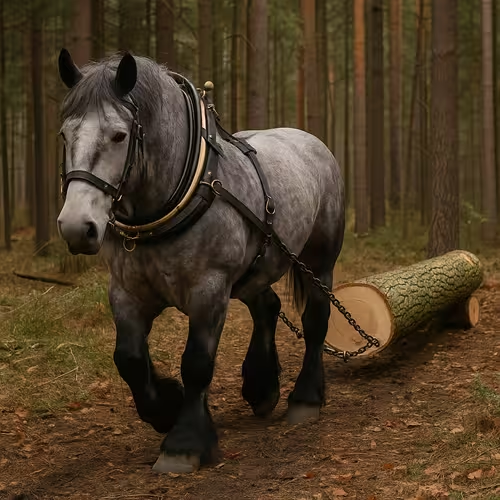
The Percheron Horse looks powerful enough to pull almost anything, but its character often surprises people even more than its size. Is this French giant only a working horse, or could it also be a calm and reliable partner for everyday riding?
The Percheron horse is one of the most recognizable draft horse breeds, with a history dating back to medieval France. It originates from the Perche region, from which it takes its name, and for centuries has impressed with its unique combination of immense strength and elegant movement.
Thanks to its powerful build and remarkable endurance, the Percheron was originally used as a war horse, and later became indispensable in transport, agriculture, and heavy draft work. Over time, its reputation spread beyond Europe—it was introduced to the United States, where it gained great popularity and is still considered one of the most important draft breeds.
This is a horse that not only impresses with its size but also captivates with its gentle temperament, intelligence, and majestic movement. Percherons are valued both in harness work and in shows, parades, and recreational riding. They combine the strength of a giant with a friendly nature, which is why they are regarded as one of the most versatile heavy horse breeds in the world.
Table of Contents
Origin and History of the Percheron Horse
The Percheron horse originates from northern France, specifically the Le Perche region near Normandy. This is where the breed gets its name. The region has been known for horse breeding since the early Middle Ages, and Percherons quickly gained a reputation as exceptionally strong, durable, and elegant animals.
The first mentions of horses from Le Perche date back to the 12th and 13th centuries, when they were used as war horses. Their powerful build, courage, and strength made them ideal for carrying heavily armored knights. Over time, with the development of firearms and changes in warfare, these horses lost their military importance but found a new role in the daily life of the French people.
In the 17th and 18th centuries, Percherons became the backbone of transport and agriculture in the region. They were indispensable for plowing heavy soils, pulling wagons, and transporting goods over long distances. Their strength and endurance led to their export to other European countries and later beyond the continent.
The breed experienced significant growth in the 19th century when Percherons were introduced to the United States. There, they quickly became one of the most popular draft horses, used both on farms and in cities for transporting goods and people. American breeding lines were selected for even greater size and strength, making them some of the largest draft horses in the world.
Today, the Percheron has retained its reputation as a show, carriage, and working horse. It appears in parades, festivals, and historical reenactments, impressing with its majestic appearance and calm temperament. It is still used in harness work and, in some regions of the world, also in agriculture. Its history is a perfect example of how a horse can combine the strength of a giant with elegance and grace admired for centuries.

Appearance and Distinctive Features
The Percheron is a draft horse breed that combines massiveness with elegance. Unlike many other heavy working horses, its build is harmonious, well-proportioned, and noble in appearance. This makes the Percheron impressive not only for its strength but also for its dignified and refined look.
Build and Conformation
- Height at the withers: 160–175 cm, although some stallions in American lines may exceed 180 cm.
- Body weight: from 800 to 1,000 kg, with the largest individuals exceeding one ton.
- Neck: long, swan-like, and elegantly set, which distinguishes the Percheron from other draft breeds.
- Chest: broad and deep, well developed, providing large lung and heart capacity.
- Back and hindquarters: short, strong back with very well-muscled, slightly rounded hindquarters.
- Head: refined and dry, with a clear yet delicate profile, large intelligent eyes, and straight ears.
- Limbs: short and powerful, with strong bone structure and wide joints; despite its weight, the horse moves with remarkable lightness.
- Feathering: light feathering around the fetlocks, much less pronounced than in Shires or Clydesdales.
Warto przeczytać:
- Discover the Belgian Horse – one of the strongest draft breeds in the world, known for its power and calm temperament.
- Learn more about the Shire horse – the tallest horse breed, famous for its size and incredibly gentle nature.
- Explore the Ardennes horse – a compact, strong draft breed ideal for heavy work and known for its endurance.
- Read about the Friesian horse – a majestic black beauty admired for its elegance and presence.
Coat Colors
The most common coat color is gray, which dominates in European breeding and gives the horses a majestic appearance. Less commonly, black, bay, and chestnut individuals can be found. In many Percherons, the gray coat lightens with age, giving them an almost “fairy-tale” look during shows and parades.
Overall Appearance
The Percheron combines the power of a draft horse with the balanced conformation typical of lighter breeds. As a result, it appears not only strong and reliable but also full of dignity and elegance, making it one of the most representative draft horse breeds in the world.
Character and Temperament
The Percheron is considered one of the most balanced and versatile draft horse breeds. It combines physical power with exceptional gentleness and intelligence. Thanks to this, it performs excellently not only in work but also in everyday interaction with humans.
Temperament Traits
- Calm and composed – it does not react nervously to noise, movement, or new situations, making it highly predictable.
- Willing to work – it has a natural inclination for effort, which makes it suitable for both field work and harness tasks.
- Intelligent and trainable – it quickly understands commands and remembers repeated tasks well.
- Sociable – it enjoys human contact, willingly cooperates, and does not show aggression toward its handler.
- Not easily startled – even in difficult conditions, it remains calm, which was especially valued when it was used as a war and transport horse.
Uses Based on Temperament
Its gentle nature and patience make the Percheron suitable not only for farm work and driving but also for hippotherapy and recreational activities. Its calm demeanor and majestic appearance also make it an ideal show horse, often seen in parades and festivals.
Overall Character
The Percheron is an example of a horse that, despite its powerful build, does not dominate humans but becomes a true partner. This has earned it a reputation as a reliable, patient, and friendly horse, making it one of the most valued representatives of draft breeds in the world.
Uses of the Percheron Horse
Percherons have been used for work for centuries. Thanks to their strength, endurance, and gentle temperament, they have served humans in many areas of life—from the battlefield to everyday farm work. Today, their use is even broader and includes both traditional and modern roles.
Historical Uses
- War horses – in the Middle Ages, Percherons carried heavily armored knights.
- Transport and agriculture – in later centuries, they became indispensable for plowing fields, transporting goods, and pulling heavy wagons.
- City horses – in the 19th century, they were commonly seen in cities, pulling carriages and omnibuses.
Modern Uses
- Recreational and wedding carriages – their majestic appearance and gray coat make them a popular choice for ceremonial occasions.
- Forestry work – still used for logging, especially in areas where machinery cannot easily operate.
- Hippotherapy and recreation – their calm temperament makes them ideal for working with children, the elderly, and people with disabilities.
- Riding – despite their large size, Percherons are relatively comfortable under saddle and are often chosen by heavier riders.
- Historical reenactments – their noble appearance makes them a frequent part of knight shows and historical parades.
- Strength competitions – in the United States, draft horse pull events are very popular, where Percherons compete in pulling massive loads.
- Agritourism and shows – increasingly found on agritourism farms, where they attract visitors and enhance local festivals.
The Percheron Today
Although agricultural mechanization has significantly reduced the role of draft horses, the Percheron has not lost its importance. It has gained new roles—from recreational and ceremonial to therapeutic—and remains one of the most versatile draft horse breeds in the world.
Breeding and Care of the Percheron Horse
The Percheron, despite its large size, is surprisingly easy to manage and care for. It is a hardy, durable breed that adapts well to various climatic conditions. At the same time, it requires proper handling, mainly due to its size and higher nutritional needs.
Housing Requirements
- Spacious stable – a Percheron needs large stalls (at least 16–20 m²) that allow it to turn around and rest comfortably.
- Daily turnout – although it is a draft breed, Percherons do not tolerate lack of movement well. Regular time in a paddock or pasture helps maintain condition and joint health.
- Ground and safety – due to their weight, it is crucial to provide dry, stable footing in both the stable and turnout areas to prevent leg and hoof problems.
Feeding
- Forage as the foundation – hay and grass should be the main components of the diet.
- Avoid excess grain – Percherons tend to gain weight easily, and obesity can strain their joints and skeletal system.
- Supplementation – during intensive work, it is beneficial to provide minerals and vitamins, especially those supporting hooves and joints.
- Constant access to water – a horse of this size requires significantly more water than lighter breeds.
Grooming
- Regular brushing – not only improves appearance but also stimulates circulation and helps detect injuries or skin issues early.
- Leg and hoof care – due to their weight, regular farrier visits and careful hoof maintenance are essential. Fetlock feathering, although lighter than in some breeds, still requires attention to prevent skin problems.
Climate Hardiness
Percherons tolerate both cold and heat well. Their thick coat protects them in winter, while in summer they cope thanks to natural thermoregulation. However, in hot conditions, special attention should be given to providing shade and access to water.
Overall Care
The Percheron is not a particularly demanding breed, but it does require regular exercise and a well-balanced diet. With proper care, these horses can maintain good health and condition for many years, with an average lifespan of 25–30 years.
The Percheron Horse in Poland
In Poland, Percheron horses are not among the most common breeds, but they can be found in several private studs and equestrian centers. Individual horses are usually imported from France and Germany, where the breed is much more widespread.
Although they do not form a large population, Percherons regularly appear at driving shows, parades, and folk events. They can often be admired at harvest festivals, regional fairs, and historical reenactments, where their powerful build and majestic movement attract great public attention.
In practice, Percherons in Poland are sometimes mistakenly identified as Ardennes or Belgian horses, as all these breeds belong to the draft horse group and share a massive build. However, the differences are visible in the details—the Percheron is typically more refined, with a longer neck and a cleaner head, which gives it a more elegant appearance.
Polish draft horse breeding is mainly based on native breeds such as the Sokółka and Sztum types, which is why the Percheron remains more of a curiosity than a widely used working breed in Poland. Nevertheless, its presence is gradually increasing, especially in agritourism centers and among enthusiasts of heavy horse breeds who value it for its elegance and gentle temperament.
Interesting Facts about Percherons
- Mass export to the USA – in the 19th century, Percherons were imported to the United States in huge numbers. In a short time, they became the backbone of the workforce—used in agriculture, transport, and city construction. It is believed that they played a key role in the rapid economic development of many regions in the U.S.
- Carriages in New Orleans – to this day, Percherons are used in the historic district of New Orleans, where they pull traditional carriages. Their calm temperament and impressive appearance make them a perfect fit for the city’s atmosphere.
- One of the oldest draft breeds – Percherons have a very well-documented history. The first mentions of horses from the Le Perche region date back to the Middle Ages, making them one of the oldest and most valued heavy working horse breeds.
- Two functional types – in breeding, there are heavy Percherons, intended for draft and strength work, and lighter types (so-called light draft), which are also suitable for riding and recreational use.
- Film horses – thanks to their majestic appearance, Percherons often appear in historical productions. In films and series, they are seen as knightly mounts and ceremonial horses in battle scenes.
The Percheron is a remarkable breed that has inspired admiration for centuries. It combines the strength of a giant, elegant conformation, and a gentle temperament, making it valued both in work and in shows or recreation. Although not very common in Poland, wherever it appears, it attracts attention and impresses with its majestic movement. It is a perfect example that a draft horse can be not only powerful but also exceptionally beautiful.
The Percheron Horse Compared to Other Draft Breeds
Percheron vs Ardennes
The Ardennes horse is one of the oldest draft breeds in Europe. It is more massive and compact than the Percheron, with shorter legs and a more distinctly “working” build. The Percheron stands out with its longer neck, cleaner head, and more elegant movement. The Ardennes is better suited to heavy field work, while the Percheron is more often seen in harness and show settings.
Percheron vs Belgian
The Belgian horse is a powerful giant among draft breeds, often heavier and more muscular than the Percheron. It is considered one of the strongest horses in the world. The Percheron, although also very strong, has a more harmonious build and smoother, more elegant movement, which is why it is more often chosen for ceremonial driving.
Percheron vs Shire
The Shire is the tallest horse breed in the world—some individuals exceed 2 meters at the withers. They are extremely powerful, but heavier and slower in movement than Percherons. The Percheron has a more proportionate build and is somewhat lighter, which gives it greater agility. The Shire impresses with its size, while the Percheron stands out for elegance and versatility.
Percheron vs Clydesdale
The Clydesdale is known for its distinctive, abundant feathering and striking presence. It has a more “showy” character, often associated with advertisements and parades. The Percheron is more versatile—it is suitable not only for shows but also for work and recreation. Unlike the Clydesdale, its movement is more restrained, but also smoother and less theatrical.
Percheron vs Sokólski and Sztumski Horses
Polish draft breeds—Sokólski and Sztumski horses—are somewhat smaller and more compact than the Percheron. They were bred mainly for agricultural and forestry work, which makes them especially strong and durable in difficult terrain. The Percheron is taller, more elegant, and more often seen in ceremonial driving and historical reenactments.
Health of the Percheron Horse
Percherons are considered hardy and long-lived horses when kept under proper conditions. Their average lifespan is 25–30 years, which is very good for such a large breed. However, their health largely depends on a proper diet, regular exercise, and consistent farrier care.
Common Health Issues
- Hoof problems – due to their large body weight, these horses are prone to strain on the musculoskeletal system and hoof diseases. Regular trimming and proper footing are essential.
- Obesity – Percherons tend to gain weight easily, especially when fed too much concentrated feed. Obesity can lead to metabolic issues and excessive strain on joints.
- Joint and muscle issues – lack of movement can cause stiffness and joint pain. Regular physical activity is necessary to maintain good condition.
- Excessive sweating – in working horses during hot weather, special care should be taken to ensure access to water and shade.
Care and Prevention
- Daily exercise – Percherons require regular activity, even if they are not used intensively for work.
- Weight control – the diet should be based mainly on forage, with limited grain intake.
- Veterinary prevention – vaccinations, deworming, and periodic check-ups are essential to prevent diseases.
- Hoof care – regular farrier visits and proper leg hygiene help prevent inflammation and lameness.
- Coat and skin care – these horses have a dense coat that requires brushing, especially during shedding seasons.
Overall Hardiness
Percherons tolerate a wide range of climatic conditions very well—from cold winters to hot summers. Their natural resilience makes them generally healthy, but they still require consistent care and appropriate living conditions.
FAQ
Is the Percheron horse suitable for riding?
Yes. It is calm and strong, and can comfortably carry even heavier riders.
How long does a Percheron horse live?
The average lifespan is 20–25 years.
Do Percherons require a special diet?
No, but due to their size, high-calorie feeds should be avoided.
How much does a Percheron horse cost?
Prices range from around $6,000 to $18,000, depending on origin and age.
Are Percherons difficult to care for?
No, but they require a sturdy stable, good ventilation, and plenty of space.