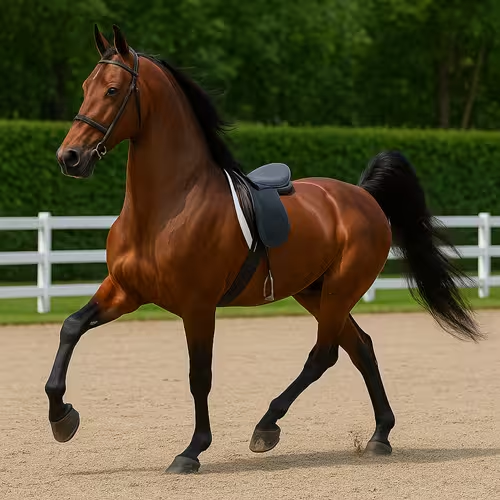
The American Saddlebred, often called the “aristocrat of the American show ring,” is a breed of remarkable charm and versatility. Originating in the United States, it has impressed riders since the 19th century with its elegance, pride, and distinctive movement. This horse combines the bloodlines of the Thoroughbred, Narragansett Pacer, and Morgan horse, which gives it lightness, expression, and charisma.
Saddlebreds are especially valued in show competitions, driving disciplines, and high-level recreational riding. Their high, rhythmic action resembles a dance, and their proudly arched neck makes them stand out in any ring. It is a breed long associated with prestige—favored by officers, gentlemen, and artists.
Today, the American Saddlebred remains one of the symbols of American equestrian culture. It is not only a stunning show horse but also a loyal companion with a gentle temperament and great intelligence.
Table of Contents
Origin and History of the Breed
The American Saddlebred originated in the United States in the 18th century, at a time when the young nation was still shaping its identity and culture. The breed developed from a combination of several valued horse types: Narragansett Pacer (known for additional gaits and endurance), the Thoroughbred (adding speed, lightness, and elegance), and Andalusian horse, which contributed pride and expressive movement. The result was a versatile horse—capable of both practical work and captivating appearance.
Initially, Saddlebreds served a highly practical role. They were indispensable cavalry horses—well-suited for long marches, battles, and military parades. Thanks to their endurance and naturally comfortable gaits, they also became favorites among travelers and settlers who covered long distances in the saddle.
Warto przeczytać:
- If you value smooth movement, explore the Tennessee Walking Horse, known for its comfort and natural gait.
- Another versatile American breed worth discovering is the Morgan horse, known for its strength, character, and adaptability.
- For a more dramatic and elegant look, discover the Friesian horse, famous for its flowing mane and expressive movement.
- If you are interested in classical elegance and dressage, check out the Andalusian horse, known for its grace and balance.
In the 19th century, with the development of show culture and equestrian competitions in America, the breed also took on a more representative role. Their flashy movement and elegance made Saddlebreds true stars of show rings and parades. It was during this time that they began to be called the “American Horse”—a horse that best symbolized the spirit and style of the United States.
A breakthrough moment came in 1891 with the establishment of the American Saddlebred Horse Association—an organization that continues to maintain studbooks and define breed standards to this day. Thanks to this, the Saddlebred became one of the first officially recognized and systematically bred American horse breeds.
Today, American Saddlebreds can be found not only in the United States but also in Europe, Asia, and Australia, where they are valued as show horses—elegant, versatile, and highly distinctive.

Appearance and Conformation
The American Saddlebred is a true symbol of elegance and refinement in the equine world. Its silhouette immediately draws attention—tall, harmonious, and expressive, with a characteristic proud carriage. It is a horse that looks as if it is presenting itself to an audience with every step.
Build and Proportions
Saddlebreds typically stand between 155 and 170 cm at the withers. Their build is light yet well-muscled, making them both beautiful and functional horses. Their conformation supports elevated movement and fluidity, highly valued in show rings and driving disciplines.
Head and Neck
The Saddlebred’s head is refined, proportional, and noble. It is distinguished by large, expressive eyes and alert, mobile ears, giving the horse an intelligent and attentive expression. The profile may be straight or slightly concave. The neck is one of the breed’s greatest assets—long, arched, and set high, emphasizing the horse’s aristocratic character.
Body and Croup
The back is generally straight, though in some horses it may be slightly sloping, which further enhances their elegant posture. The chest is deep and well-developed, providing good lung capacity. The croup is strong, full, and rounded, giving the horse power and dynamism in movement.
Limbs and Movement
The Saddlebred’s legs are clean, straight, and well-set, ending in strong, well-proportioned hooves. Thanks to their conformation, these horses are known for their high, animated action, which is a hallmark of the breed. Their movement is always springy and full of expression.
Coat Colors
Saddlebreds come in all basic coat colors: bay, chestnut, black, gray, and palomino. A particularly interesting and distinctive feature of the breed is the presence of pinto-patterned horses, which are especially popular in the United States and add even more visual appeal in the show ring.
Overall Impression
The overall appearance of the American Saddlebred can be described as a combination of lightness, elegance, and athleticism. It is a breed whose look perfectly matches its temperament—proud, expressive, and full of grace.
Temperament and Character
American Saddlebreds have long been considered some of the most spectacular and expressive riding horses. Their lively temperament makes them stand out in shows and competitions, while their gentle nature makes them friendly and relatively easy to work with.
Mental Traits
Saddlebreds are horses that combine energy with obedience. They are energetic yet balanced, which means that in the hands of an experienced rider they do not become nervous or unpredictable. This makes them suitable for both show environments and recreational riding.
Their curious and open nature allows them to learn new tasks quickly and respond well to training. They are highly intelligent, easily read human intentions, and enjoy interaction with their handler.
Relationship with Humans
This breed responds exceptionally well to contact and closeness. Saddlebreds enjoy cooperation, and working with humans is a natural need for them. Thanks to their sociable nature, they can form strong bonds with their handlers, making them loyal and rewarding partners.
Requirements and Energy
Saddlebreds have a high need for movement and activity, so they do best with riders who can provide regular training and consistent engagement. They require consistency, but not harshness—they do not respond well to pressure, but thrive with a positive and systematic approach.
Although they can be spirited, with proper handling and calm training they become very obedient and eager to learn. Their natural expression and temperament give them impressive presence and “spark” in the arena.
The American Saddlebred is a breed that combines vitality with elegance. It is an excellent choice for riders who value working with an intelligent, energetic, yet friendly partner—one that is both striking and reliable.
Uses of the Breed
The American Saddlebred has been a versatile horse since the beginning of its history, combining functionality with elegance. Today, its primary use is focused on shows, style competitions, and driving, although the breed also finds a place in recreational and amateur riding.
Shows and Style Competitions
It is in the show ring that Saddlebreds fully display their strengths. They compete in saddle seat classes, where special attention is given to their high, rhythmic action and expressive movement. They also appear in disciplines such as:
Fine harness – elegant single-horse driving classes where presentation and flashy movement are key,
Pleasure riding – show-style riding that evaluates comfort, manners, and overall way of going,
Park horse – the most spectacular category, where the horse demonstrates maximum expression, pride, and show presence.
Show Driving
Saddlebreds are often seen in carriage exhibitions, where they impress audiences with their elegance, energy, and style. Their balanced conformation and confident movement make them well-suited for representative driving competitions.
Recreational Riding and Light Sport
Although Saddlebreds are primarily show horses, their gentle temperament and willingness to cooperate also make them suitable for recreational riding. Their energetic yet comfortable movement provides a very enjoyable riding experience.
Some bloodlines, especially those less focused on extreme show traits, can also be used in light sport—such as low-level jumping, trail riding, or recreational dressage.
The American Saddlebred is a true specialist in elegance and style, thriving in the world of shows and aesthetic competitions. At the same time, it remains a people-friendly horse, increasingly chosen as a recreational partner for riders seeking a striking and intelligent companion.
Movement and Gaits
American Saddlebreds are renowned for their exceptionally expressive movement, which sets them apart from other American breeds. Their way of going is not just a means of locomotion—it is a performance that captures attention in shows and competitions. High knee action, freedom of movement, and fluidity give them a distinctive “dancing” style.
Two Main Types of Movement
Three-gaited – horses of this type perform three classic gaits:
Walk – rhythmic, even, and full of energy,
Trot – flashy, with high knee action and dynamic leg movement,
Canter – smooth, springy, and well-balanced.
This type is more versatile and commonly seen in show classes where harmony and elegance are emphasized.
Five-gaited – in addition to the three basic gaits, these horses perform two extra gaits that make them especially spectacular:
Slow gait – a four-beat, collected, and highly stylized show gait. The horse moves with controlled precision, almost accentuating each step, creating a refined and elegant effect.
Rack – a fast, four-beat gait that is dynamic and eye-catching. This is the gait that gives Saddlebreds their reputation as “show ring dancers.” It is comfortable for the rider while remaining highly impressive for spectators.
Style and Expression
The movement of the American Saddlebred is a combination of expression, power, and lightness. These horses not only lift their legs high but also move with natural pride and presence, as if performing on a stage. This unique expression is what makes them favorites in American show competitions.
Practical Significance of the Gaits
Although today they are primarily show horses, the additional gaits (slow gait and rack) originally had practical value—they allowed for comfortable, fast, and sustained travel over long distances. Nowadays, however, they serve mainly an aesthetic and competitive purpose.
Comparison of the Saddlebred with Other Breeds
The American Saddlebred is often compared with other American gaited breeds and show horses. While they share elegance and expressive movement, each breed has its own unique characteristics.
Saddlebred vs. Tennessee Walking Horse
Movement style: The American Saddlebred moves with high leg action and strong expression, while the Tennessee Walking Horse is known for its smooth and comfortable running walk—more practical than showy.
Use: Saddlebreds dominate in style classes (saddle seat, fine harness), whereas Tennessee Walkers are more common in recreation and long-distance trail riding.
Temperament: Both breeds are gentle, but the Saddlebred is more energetic and expressive, while the Walker is calmer and more family-oriented.
Saddlebred vs. Morgan
Build: Morgan horse are more compact and versatile, while Saddlebreds are taller, more refined, and have longer necks.
Gaits: The Morgan typically performs three classic gaits (sometimes additional ones), while the five-gaited Saddlebred includes the slow gait and rack—unique and highly expressive.
Use: Morgans excel in recreation, ranch work, and multiple disciplines, whereas Saddlebreds specialize mainly in shows.
Saddlebred vs. Andalusian (PRE)
History and culture: The Andalusian horse represents Spanish aristocracy and classical riding traditions, while the Saddlebred is rooted in American show culture.
Movement: The Andalusian naturally excels in collection and higher-level dressage movements, while the Saddlebred impresses with high leg action and dramatic presentation.
Temperament: Both breeds are intelligent and loyal, but the Andalusian is generally more stable and versatile, while the Saddlebred is more expressive and “theatrical.”
The American Saddlebred is a show horse created for elegance and artistic presentation. The Tennessee Walking Horse offers comfort and smoothness, the Morgan provides versatility and work ethic, and the Andalusian brings classical elegance and dressage ability. Each of these breeds has its own unique charm, and the choice depends on whether a rider values spectacle, comfort, versatility, or tradition.
Breeding and Registration
The American Saddlebred has been under strict breeding control for over 130 years, overseen by the American Saddlebred Horse Association, founded in 1891. To this day, the organization plays a key role in maintaining the high standards of the breed.
Registration and Studbook
Both three-gaited and five-gaited horses can be registered.
Full pedigree documentation is required—horses must descend from parents registered with the ASHA.
Each horse is evaluated based on movement, posture, overall presence, and temperament, ensuring the breed retains its elegant, show-type character.
Selection Criteria
Breeders place great importance not only on impressive gaits but also on the overall appearance of the horse:
– head – refined, with a noble expression and large eyes,
– neck – long and elegantly arched,
– tail – set high and carried with style,
– body posture – light, graceful, and well-balanced.
Breeding Lines and Markets
In the United States, breeding programs are primarily focused on show and driving horses, although more versatile lines suited for recreational riding are also emerging.
American Saddlebreds are exported to Europe (including the United Kingdom, Germany, and Scandinavia) and Asia, where they are appreciated as both show horses and family companions.
Breeders often select stallions with proven success in the show ring, which enhances the prestige of a given bloodline.
Breeding Goals
The goal is to preserve elegance, expressiveness, and spectacular movement, while also maintaining a gentle temperament. As a result, the American Saddlebred remains not only a beautiful horse but also a practical one—easy to handle and safe to ride.
Saddlebred in Poland and Europe
Although the American Saddlebred is one of the icons of American breeding, its presence in Poland is still very limited. Only a few individuals are owned by private enthusiasts who have imported horses from the United States or Western Europe, mainly out of passion for this unique breed. They are most often seen in liberty shows, natural horsemanship, and spectacular equestrian performances.
Saddlebred in Europe
On the European continent, Saddlebreds are more recognized than in Poland. The largest numbers can be found in:
Germany – where small but professional breeding programs focus on show and utility horses,
Netherlands – where Saddlebreds are popular in the show scene, often featured in liberty performances and “horse dancing,”
Sweden and Norway – where they are imported into private stables and riding schools,
United Kingdom – where the Saddlebred is considered an exotic breed but is gaining increasing interest in shows and driving sports.
Growing Interest
In Europe, Saddlebreds are gaining popularity mainly among:
– enthusiasts of show riding and historical reenactments,
– riders practicing liberty work and horse dancing,
– fans of saddle seat-style presentation.
Although they are not as numerous as breeds like the Hanoverian horse or the Friesian horse, their unique presence and elegance are helping them gradually gain recognition beyond the United States.
Care and Health of the American Saddlebred
American Saddlebreds are generally considered a healthy and relatively hardy breed. However, their expressive movement and specific conformation mean they require well-planned care. To ensure a long and active life, maintaining both physical and mental condition is essential.
Key Aspects of Care and Management
Daily exercise and human interaction – these are social horses that do not tolerate boredom or isolation well. Regular activity not only keeps them fit but also supports mental stability.
Muscle and joint condition – due to their high leg action, special attention must be paid to their limbs. Proper warm-up, varied work in different gaits, and suitable footing help reduce the risk of strain.
Leg and hoof care – regular trimming and appropriate shoeing (depending on use) are essential. In show lines, where high leg action is emphasized, monitoring tendons and joints is particularly important.
Balanced diet – Saddlebreds are not overly demanding nutritionally, but their energetic nature and activity level require a diet tailored to their workload. Diets based on high-quality forage, moderate grain intake, and proper vitamin and mineral supplementation work best.
Coat, mane, and tail care – an elegant appearance is a hallmark of the breed. Regular grooming prevents tangling and enhances natural shine.
Lifespan and Health Considerations
With proper care, American Saddlebreds can live 25–30 years, and many remain active in sport and shows well into old age. The most common health issues include:
– strain on tendons and joints (due to intensive show training),
– sensitivity to unsuitable footing (too hard or too slippery),
– occasional tendency toward metabolic issues if the diet is unbalanced.
Regular veterinary check-ups, proper supplementation, and a varied training routine help prevent most of these problems.
FAQ
Is the American Saddlebred suitable for beginners?
It is not recommended for complete beginners—these horses are spirited and require experienced handling.
Do these horses compete in classical disciplines?
They are mainly seen in saddle seat and fine harness classes. They rarely compete in classical dressage or jumping.
Are Saddlebreds gaited?
Yes – the five-gaited line has two additional gaits beyond the walk, trot, and canter.
Are there pinto (spotted) Saddlebreds?
Yes. American Saddlebreds also occur in pinto patterns, which makes them even more eye-catching and spectacular.
The American Saddlebred is a breed created for show and elegance. Its extraordinary movement, expressive character, and noble conformation make it ideal for experienced riders seeking a horse with true class. It is a horse that captivates—in movement, presence, and spirit.