
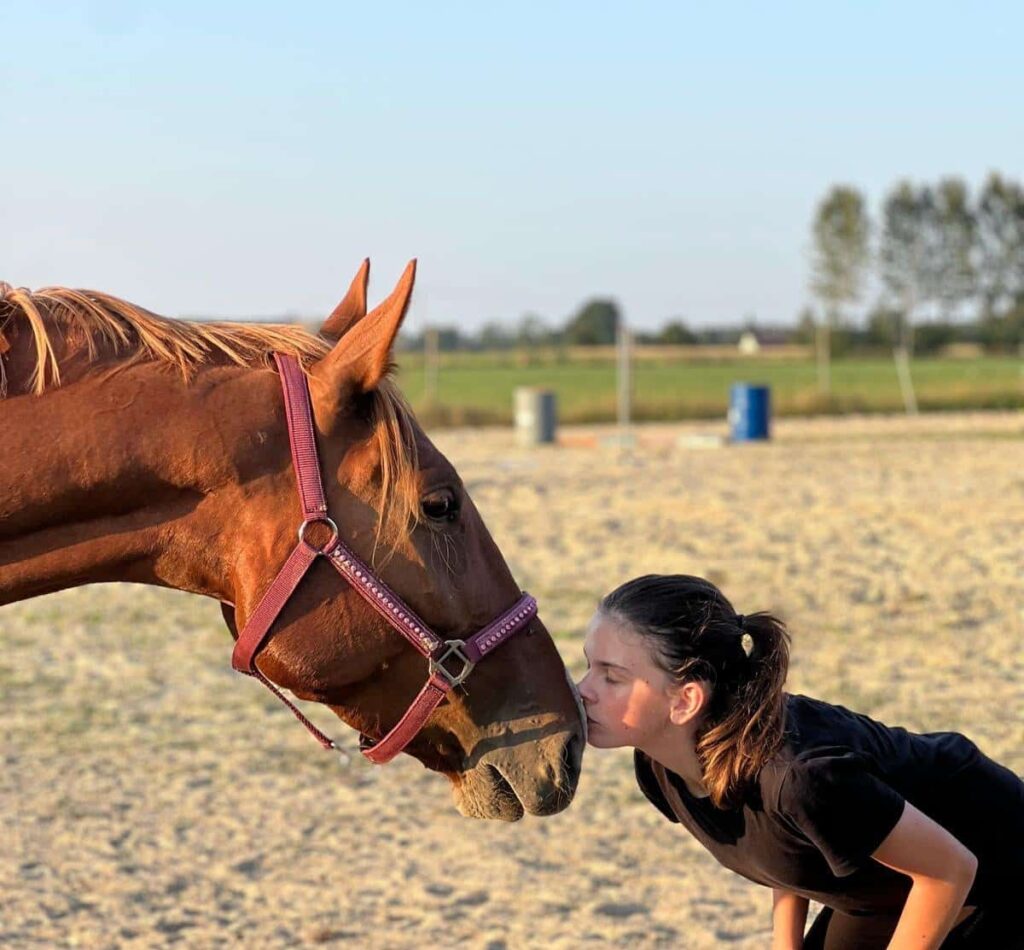
Natural Horsemanship – Horses are animals with an incredibly rich language of body signals and emotions. Natural horsemanship offers techniques that help you understand this language and build a strong bond—a bond based on trust between you and your horse. You will learn everything in this article!
Table of Contents
What is Natural Horsemanship? Philosophy and Approach to Working with a Horse
Natural horsemanship is an approach to working with a horse that focuses on harmonious cooperation, mutual understanding, and building a relationship based on trust. The philosophy of natural horsemanship assumes that horses, like humans, have their own emotions, needs, and ways of communication that we must understand in order to work with them effectively. Unlike traditional training methods, natural horsemanship emphasizes observing horses’ natural behavior in a herd and transferring those patterns into interactions between the human and the horse. Key elements include gentleness, patience, and conscious communication based on body language and subtle signals.
The main goal of this philosophy is to create a partnership. A relationship in which the horse wants to cooperate with the human, rather than being forced to do so. Instead of using force and pressure, the rider learns to “communicate” with the horse in a way that is natural and understandable for it. Natural horsemanship assumes that the better we understand the horse’s emotions, the more effective and satisfying our work together becomes.
This approach places strong emphasis on softness and empathy, which helps horses feel safer. As a result, training becomes a positive experience for them.
Horse Body Language – How to Interpret Signals from Your Horse
Horses, like other herd animals, communicate primarily through body language. Understanding these subtle signals is a key element of natural horsemanship. For horses, every movement, body position, or even a glance has a specific meaning. It helps them communicate both with other horses and with humans. The ability to read these signs allows us to better understand what our horse is thinking. It helps us recognize how it feels and what it needs, while also enabling us to build a deeper bond and more effective cooperation.
Basic signals sent by horses:
Ears: The position of the ears is one of the most important communication tools. When the ears are pointed forward, the horse is interested or focused on something in the environment. When they are pinned flat to the sides, it indicates irritation or anger. An ear turned toward the human during work suggests that the horse is listening and focusing on the rider.
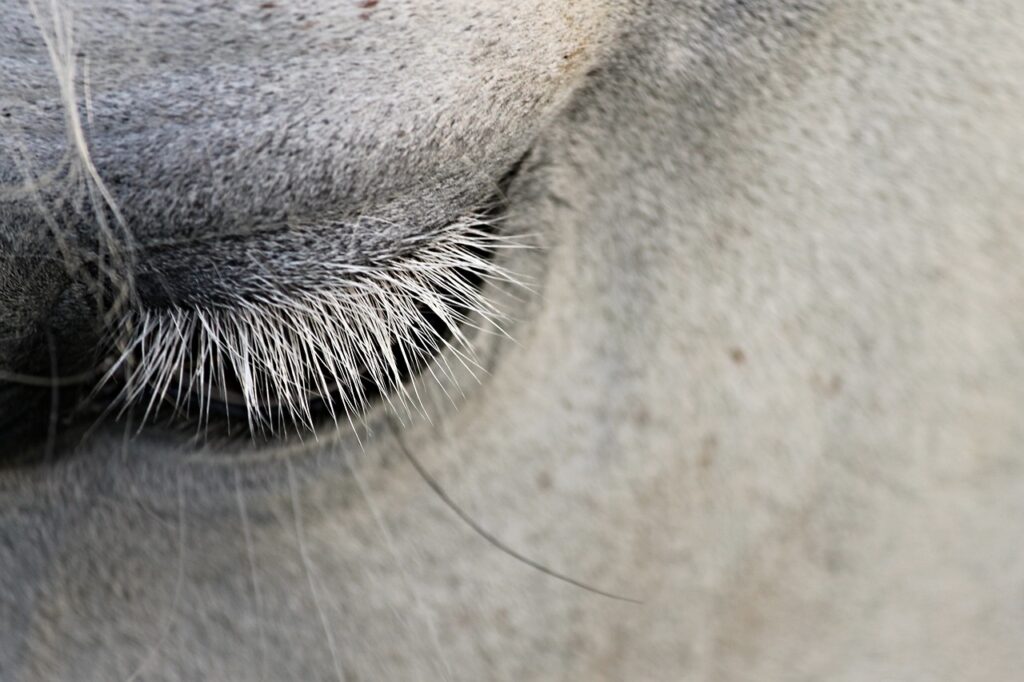
Eyes: Carefully observing a horse’s eyes can reveal a lot about its emotional state. Wide-open eyes and tense eyelids may indicate fear or anxiety. In contrast, relaxed eyelids or even half-closed eyes are signs of relaxation and trust.
Mouth: Movements of the mouth and lips are another important signal. A horse licking or yawning usually indicates relaxation. On the other hand, tightly closed lips may be a sign of stress or tension.
Overall body posture: The horse’s entire posture tells us a lot about its mood. A horse standing stiffly, with its head raised and muscles tense, usually feels anxious. In contrast, a relaxed posture, with a lowered head and loose legs, indicates comfort and a sense of safety.
Tail: Tail movements also play an important role in communication. Gentle swishing often signals irritation, while more forceful movements may indicate anger or frustration. A calmly hanging tail is a sign of relaxation.
Why is understanding horse body language so important?
Understanding a horse’s body language allows the rider to respond better to the animal’s needs and avoid stressful situations. Thanks to this skill, you can recognize when the horse feels anxious, tired, or ready to continue working. Moreover, correctly interpreting the signals sent by the horse helps the rider adjust their actions to the horse’s mood. This significantly increases training effectiveness and strengthens mutual trust.
Key Techniques of Natural Horsemanship: Building Trust and Communication
Natural horsemanship is based on creating a strong, partnership-based relationship between a human and a horse, built on mutual trust and effective communication. Unlike more traditional training methods, natural horsemanship focuses on understanding the horse’s natural instincts and adapting the training approach to its behavior and needs. Proper use of trust-building techniques allows for the creation of a safe and harmonious relationship. As a result, the horse wants to cooperate with the human, rather than being forced to do so.
Here are some key natural horsemanship techniques that help build trust and effective communication with a horse:
Introducing gentle pressure and release in natural horsemanship
One of the fundamental principles of natural horsemanship is applying gentle pressure to encourage a response from the horse, and then immediately releasing it once the horse performs the desired action. Pressure can be physical (e.g., a light touch with the leg or reins) or psychological (e.g., focused attention directed at the horse). This technique helps the horse understand what is expected and provides a clear reward in the form of instant relief from pressure. It teaches the horse to cooperate based on mutual respect, without the use of force or aggression.
The principle of “feel, don’t force”
Horses are extremely sensitive animals that can detect even the slightest tension in a rider’s body. A key technique in natural horsemanship is learning to feel the horse—its movements, emotions, and energy. Instead of forcing obedience, the rider should work with the horse’s natural instincts, respond to subtle signals, and guide training in a way that encourages the horse to cooperate willingly. This approach not only builds trust but also develops the rider’s sensitivity and awareness.
Boundaries and leadership based on mutual respect
In a herd, horses naturally create a hierarchy where each member knows its place. In natural horsemanship, it is important for the human to become a leader—a figure the horse trusts and respects. Leadership does not mean dominance or force, but rather consistent and clear boundaries that provide the horse with a sense of safety. The key is to be firm yet gentle, set understandable limits, and maintain consistency.
Groundwork – building trust without a saddle
Before a horse learns to cooperate under saddle, it is essential to establish a strong bond through groundwork. Exercises such as leading, walking on a loose lead rope, responding to voice commands, and reacting to body language are the foundation of a trust-based relationship. During groundwork, the horse learns that the human is a predictable, fair, and responsible leader, which translates into better communication during riding.
Rewards instead of punishment in natural horsemanship
Natural horsemanship places strong emphasis on positive reinforcement—rewarding desired behaviors rather than punishing mistakes. Rewards do not always have to be physical (such as treats); for a horse, release of pressure, a gentle touch, or a calm voice can be highly motivating. This technique strengthens positive associations with training and makes the horse more willing to perform tasks, as it learns that cooperation brings benefits.
Observation and adapting training to the horse’s mood
Horses, like humans, have better and worse days. The ability to observe and recognize a horse’s emotions is essential for adjusting training appropriately. If the horse is anxious, stressed, or tired, it is important to reduce the intensity of work and allow time for rest. This flexibility builds trust and helps the horse see the human as someone who cares about its well-being.ść pracy i pozwolić mu na chwilę odpoczynku. Taka elastyczność buduje zaufanie i sprawia, że koń postrzega człowieka jako kogoś, kto dba o jego dobrostan.
Worth reading:
Understanding Horse Emotions – Why Empathy Is the Foundation of Natural Horsemanship
Empathy—the ability to understand and share the feelings and needs of another being—is a fundamental pillar of natural horsemanship. Horses, as herd animals, are highly sensitive to their environment, which means their emotions play a key role in their daily lives and interactions with humans. Understanding what your horse feels and responding with compassion and awareness can significantly improve communication, strengthen your bond, and build trust—the foundation of effective training.
What emotions do horses experience?
Horses, like humans, can experience a wide range of emotions such as joy, fear, frustration, anxiety, and trust. In natural horsemanship, it is essential to understand that a horse reacts emotionally to its environment. Every new situation, stimulus, or change can trigger an emotional response. For the rider, it is important to recognize these emotions and adjust their actions so that working with the horse takes place in an atmosphere of safety and mutual understanding.
Why is empathy so important in the relationship with a horse?
Empathy allows the rider to see situations from the horse’s perspective, understand its reactions, and adjust their behavior to its needs. As a result, the horse feels understood, which leads to greater trust and better cooperation. Natural horsemanship is not about forcing specific behaviors, but about building a relationship based on mutual respect.
Example: If a horse is stressed or frightened, an empathetic rider will not force it to perform a task. Instead, they will help the horse calm down by using relaxation techniques, allowing it to feel safe. This approach teaches the horse that the human is a partner, not a threat.
How to read a horse’s emotions?
Reading a horse’s emotions requires careful observation of its behavior and body language. An empathetic rider pays attention to the following elements:
- Ear position – Relaxed ears pointed forward indicate calmness and interest. Ears pinned flat suggest anxiety, frustration, or fear.
- Eyes – Wide-open eyes with visible whites signal fear or tension. Soft or half-closed eyes indicate trust and relaxation.
- Body posture – A stiff posture, tense muscles, and a raised head signal anxiety or readiness to flee. A relaxed body and lowered head indicate calmness.
- Tail movement – Gentle swishing may indicate irritation, while a calmly hanging tail signals relaxation.
Building trust through empathy
Trust is a key element in any relationship with a horse, and empathy is the primary tool for building it. When a horse feels that its emotions are respected and understood, it begins to see the human as a partner it can trust. It is important to adjust the intensity and methods of training to the horse’s mood and condition. For example, on days when the horse is stressed, it is better to avoid demanding exercises and instead focus on calm, trust-building work.
Empathy and training effectiveness in natural horsemanship
Training based on empathy is far more effective because a horse that feels safe and understood is more willing to learn and cooperate. Instead of forcing obedience, a rider working with empathy focuses on building positive associations with training. As a result, the horse becomes more motivated to cooperate. Horses whose emotions are respected experience less stress, which leads to better results both in groundwork and under saddle.
Practical Everyday Exercises – How to Strengthen the Bond with Your Horse Using Natural Methods
Natural horsemanship is not just a technique, but above all a daily practice of building a strong and harmonious relationship with your horse. Mutual trust and communication are key in this philosophy, and regularly performing the right exercises helps strengthen the bond between rider and horse. Daily, practical tasks based on natural methods help horses feel understood, safe, and more willing to cooperate. Below you will find several proven exercises that you can introduce into your daily routine to build deeper understanding and trust.
Natural Horsemanship – Groundwork with a Horse
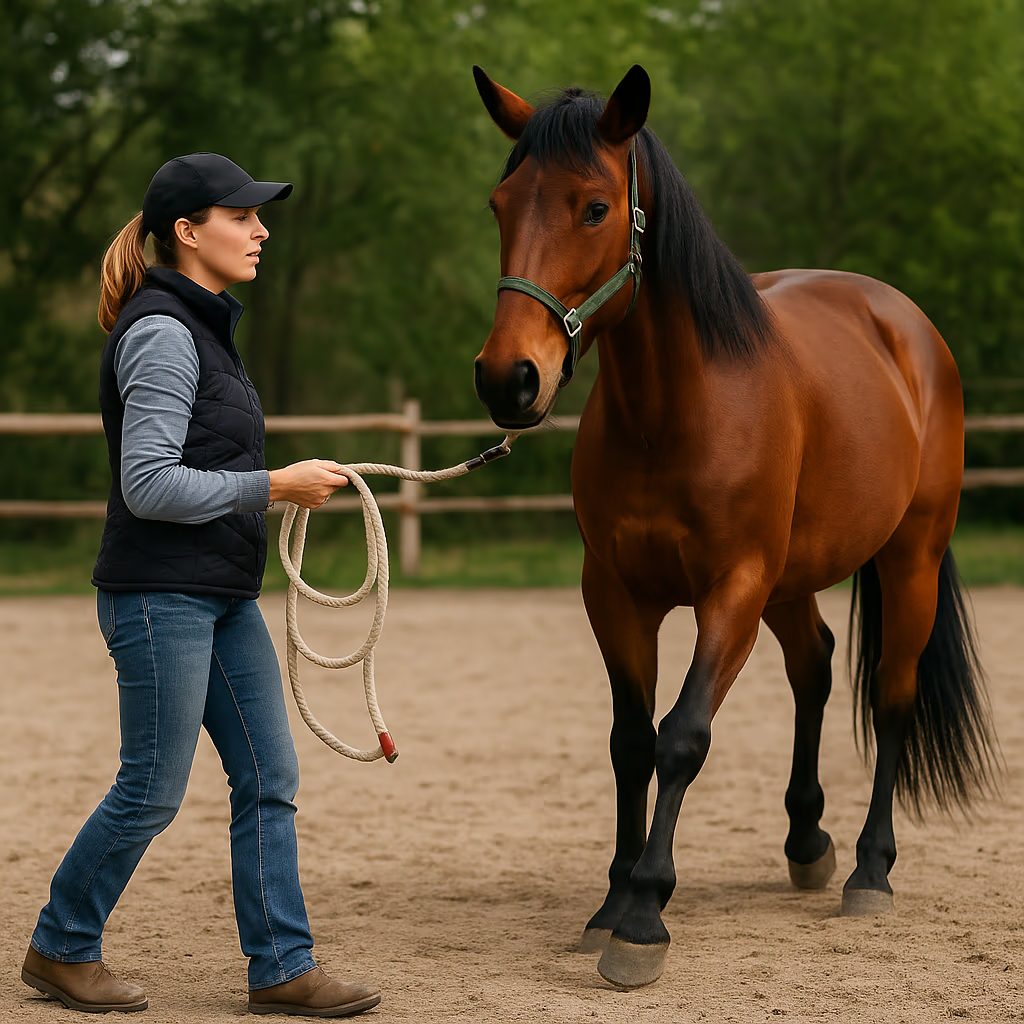
Working with a horse without a saddle or bridle, meaning from the ground, is the foundation of building a bond. Simple exercises such as leading the horse on a loose line, teaching it to respond to body signals or gestures, help develop effective communication. Focusing on subtle cues (e.g., changes in body direction, light pressure on the lead rope) teaches the horse that it does not need to be controlled by force. Gentle guidance is enough for it to understand the human’s intentions.
Exercise: Take a walk with your horse on a loose lead rope. Try guiding the horse in different directions, stopping, and changing the pace. Pay attention to its reactions—does it follow you with interest, or does it seem tense? Every signal is a clue about what needs improvement.
Mindfulness Exercises – “Join-Up” and Round Pen Work
Join-up is a technique developed by Monty Roberts, based on working in an enclosed area (round pen), where the horse, after a series of subtle signals and movements, chooses on its own to follow the human. This exercise builds trust because the horse learns that the human is not a threat, but a leader who gives it space to make decisions.
Exercise: While working in a small enclosure, give the horse time to move freely. Gradually begin to send gentle signals—changing the direction of its movement. When you notice the horse starting to observe you and “ask” what to do next, stop and slightly turn away. In most cases, the horse will begin to approach you—this is its way of building a connection and accepting your leadership.
Gentleness and Massage – Building a Physical Connection with Your Horse
Physical contact is extremely important for horses. Gentle stroking, massage, and touching areas that feel comfortable for the horse strengthen trust and teach it that humans can be a source of positive sensations. Regular relaxation massage not only helps loosen muscles but also builds a bond based on trust and closeness.
Exercise: After training, spend a few minutes gently massaging your horse’s back, neck, and legs. Pay attention to its reactions—if it begins to relax, lower its head, or close its eyes, it is a sign that it feels comfortable and safe. This kind of routine strengthens positive associations with your presence.
Following Without a Rope – Developing Natural Connection
One of the most beautiful moments in working with a horse is when it follows a human without the need for a rope or reins. This is a clear sign of a strong bond based on trust and understanding. To achieve this level of cooperation, it is important to regularly work on communication through body language and energy.
Exercise: In a safe area (such as an arena or enclosed space), start with a lead rope. Guide the horse using minimal signals—body movements and gestures. Once the horse begins responding to subtle cues, remove the rope and try to guide it using only body language. Over time, the horse will learn to follow you even without physical contact.
Desensitization Exercises – Getting Used to Stimuli and Building Trust
Horses are naturally alert and often react with fear to unfamiliar stimuli. An important part of building trust is desensitizing the horse to various potentially frightening situations, such as noises, sudden movements, or unfamiliar objects. The goal is to teach the horse that not every stimulus is a threat and that the human can be a source of safety.
Exercise: Start by showing the horse an object that may cause concern (e.g., an umbrella, tarp, or ball). Allow the horse to approach it at its own pace. When the horse touches it or stops reacting with fear, reward it with gentle stroking and praise. Over time, the horse will learn that unfamiliar stimuli are not dangerous, and that you are a guide who helps it stay calm.
Pat Parelli – Creator of Modern Natural Horsemanship
One of the most recognizable figures associated with natural horsemanship is Pat Parelli—an American horseman, trainer, and creator of the Parelli Natural Horsemanship system. His philosophy is based on a deep understanding of the horse’s world, building partnership-based relationships, and developing the rider’s skills in communication, leadership, and empathy.
Parelli, often considered an equestrian mentor, developed a practical educational system that teaches step by step how to achieve communication with a horse without force or coercion. His approach combines knowledge of horse psychology with practical exercises that lead to greater trust and harmony in the horse–human relationship.
Official website of Pat Parelli.

Robert M. Miller – Understanding the Horse from the Very Beginning
Among the individuals who have had a significant impact on the development of natural horsemanship, it is impossible not to mention Robert M. Miller—an American veterinarian and expert in equine behavior. His contribution focused primarily on demonstrating how important it is to understand a horse’s psychology from the very first days of its life.
Miller popularized the concept of imprint training, a method of building a bond with a foal immediately after birth. This approach makes future training easier and helps shape the horse in an atmosphere of trust and calmness.
His research on instincts and natural reactions in horses contributed to the development of more empathetic and effective training methods. Like Pat Parelli and Monty Roberts, Miller promoted an approach in which the human does not dominate the horse but becomes its guide and partner.
Thanks to his work, many riders began to better understand how crucial early experiences are for a horse and how important it is to work in harmony with its natural instincts.
Official website of Robert M. Miller.

FAQ
What Are the Basic Principles of Natural Horsemanship?
Natural horsemanship is based on training methods that respect a horse’s natural instincts and communication style. Here are the most important principles:
Building a relationship based on trust and respect – the horse should see the human as a guide, not a dominating force.
Clear and consistent communication – horses understand consistent signals much better than chaotic commands.
Groundwork as the foundation of cooperation – before riding, it is important to build a relationship through work from the ground.
Avoiding excessive pressure and force – force-based methods go against the principles of natural horsemanship.
Adapting methods to the individual horse – every horse is different, so the approach should match its temperament.
Observing and learning the horse’s signals – paying attention to body language helps better understand the horse’s needs.
Positive reinforcement instead of punishment – rewarding desired behavior leads to better cooperation.
How to Start Working with a Horse Using Natural Horsemanship Methods?
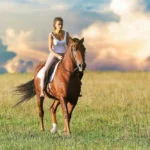
Starting to work with a horse using natural horsemanship methods requires a shift in your training approach. Here are the steps worth implementing:
Observe your horse – spend time in the pasture or stable, analyze its behavior and body language.
Build trust through groundwork – before riding, work on the lunge, lead the horse on a rope, and teach it to respond to your signals.
Learn to control your energy – horses react to the rider’s energy, so it is important to remain calm and predictable.
Start with gentle, precise signals – the less force you use, the better the horse will respond.
Introduce liberty work – exercises in an open space without a rope or halter help build communication.
Train regularly, but without pressure – short, frequent sessions are better than long, forced training.
Do not expect immediate results – natural horsemanship requires patience and gradual relationship building.
Is a “horse whisperer” the same as a natural horsemanship trainer?
Not exactly. The term “horse whisperer” comes from popular culture and is often associated with someone who can “magically” calm a horse and teach it to cooperate. In reality, there is no magic involved—these are usually riders or trainers who deeply understand horse body language.